
Sheep Pastures to Progress: A Worthington Art & History Installation
Sheep Pastures to Progress is a walkable outdoor art and history installation celebrating America’s 250th anniversary, featuring painted sheep silhouettes created by local artists, schools, and community organizations - each with a QR code linking to stories and history curated by the Worthington Historical Society. Currently on view at the Orange Johnson House yard.
Swipe the sheep to see the full flock!
-
![]()
Worthington Historical Society
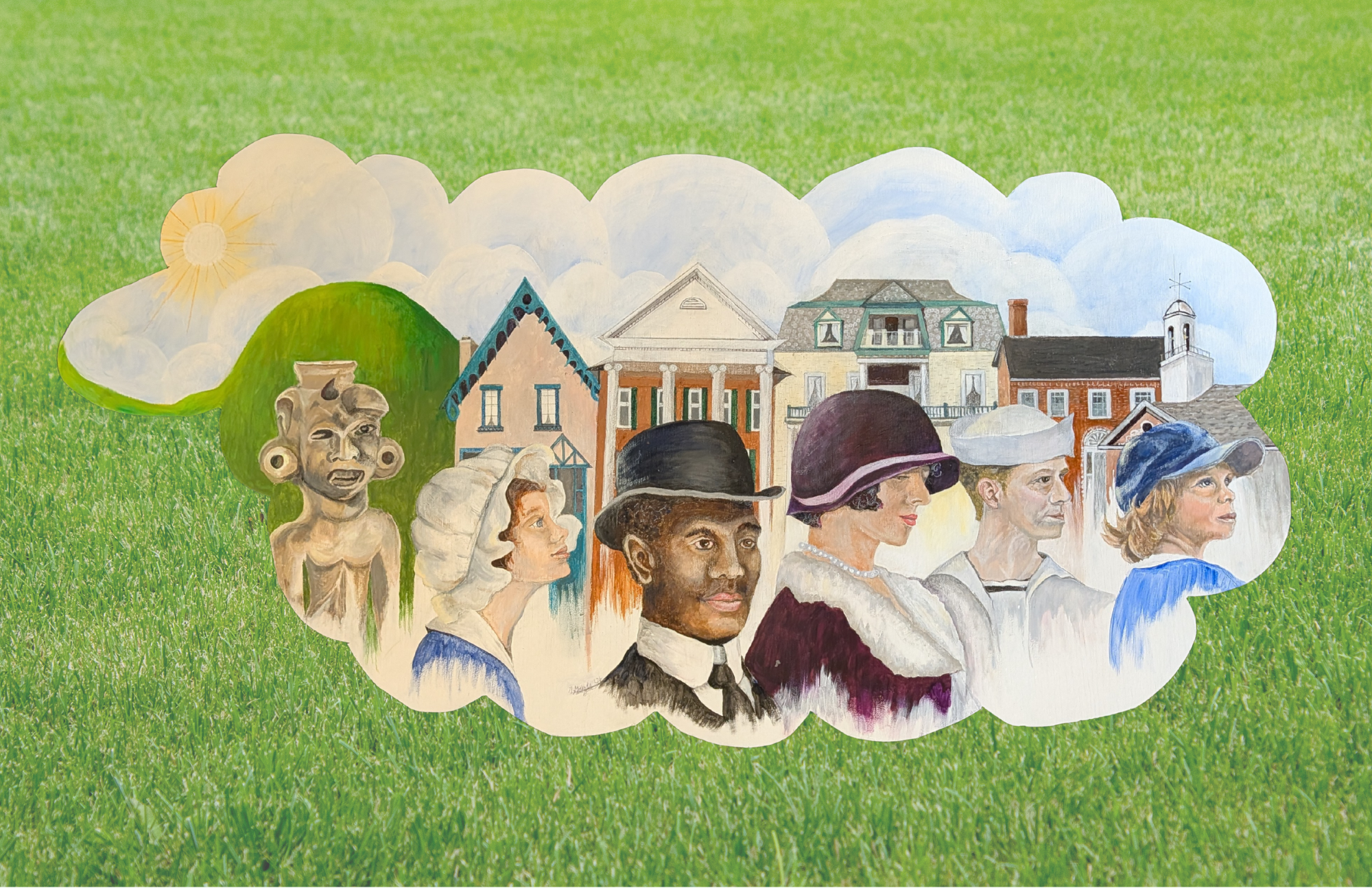
Worthington has a rich history of community and architecture. The Worthington Historical Society's sheep project illustrates both visual signifiers of Worthington and the eras of human beings who lived in and led Worthington through the years. Reference is made to the pre-historic people who once lived on the land and constructed many earthworks, including the Hopewell mound that still exists on Plesenton Drive.
The painting also portrays an original pioneer settler and folks from the 1920s, the Great Depression, and World War Il, ending with a contemporary youth looking upward to the future. Both representational and abstract styles are used to suggest the etherealness of time.
THE ORGANIZATION: WORTHINGTON HISTORICAL SOCIETY
Founded in 1955 following Worthington's sesquicentennial celebration, the Worthington Historical Society was created to preserve the community's historic landmarks and heritage.
Initially housed in Sharon Memorial Hall, the Society became known for its home tours, educational programs, and community events. Its most significant achievement was the acquisition and restoration of the Orange Johnson House, purchased in 1963 and transformed into a living museum. Through preservation, exhibitions, and third-grade history programs, the Society continues to safeguard Worthington's past for future generations.
THE ARTIST: NICOLE GNEZDA
Nicole Gnezda (Niki) is a writer, artist, speaker, and retired Worthington High Schools art teacher. with a Ph.D. in creativity studies from The Ohio State University. She has published a book, poetry, and professional articles. When not writing and presenting, Niki makes bobbin lace with her ancestor's bobbins, paints, cooks, and travels. She believes creativity takes life apart and reassembles it in magnificent ways. It gets us through and sometimes heals us. www.compassioncreativityandteaching.com
-
![]()
Experience Worthington
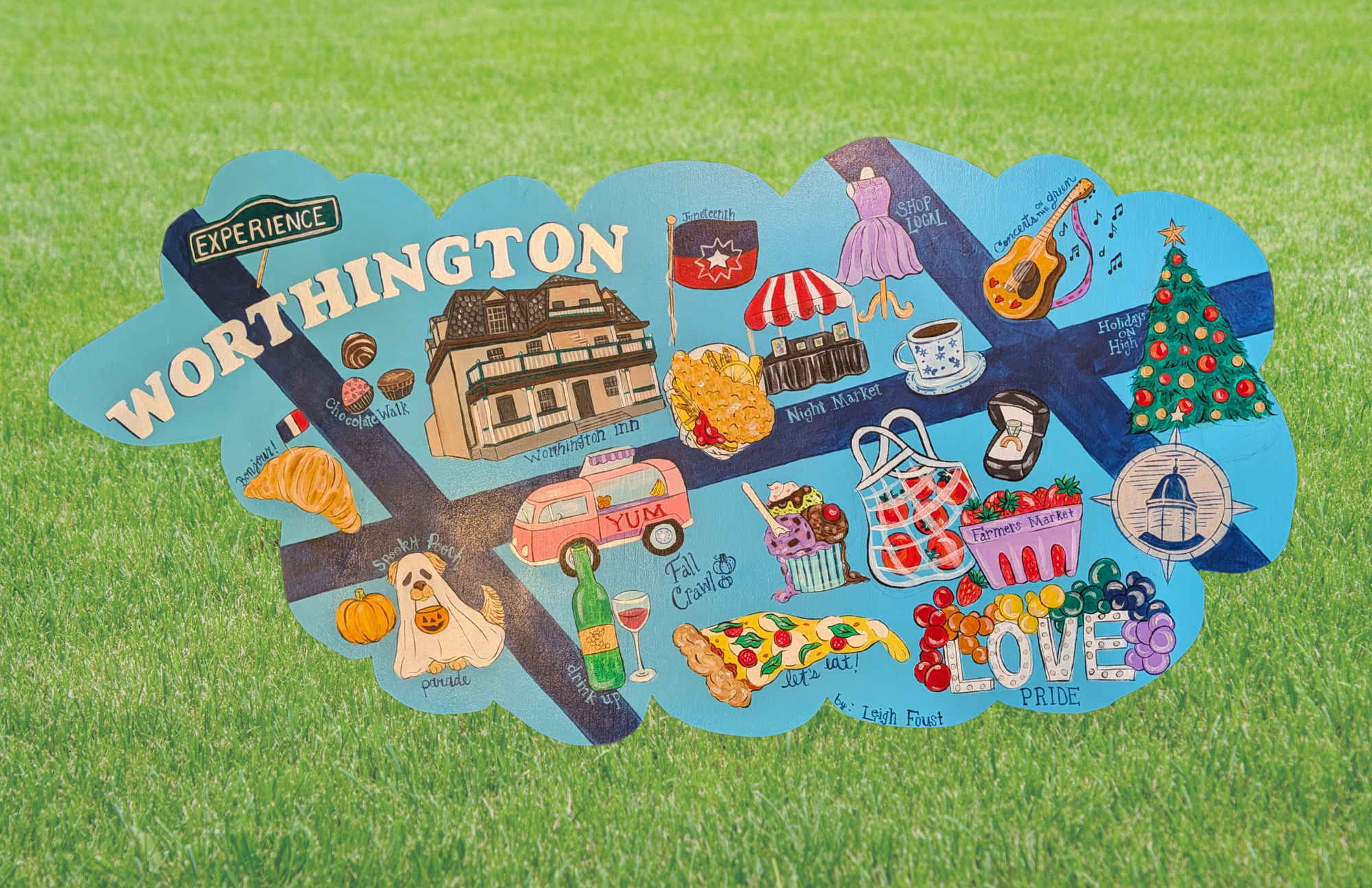
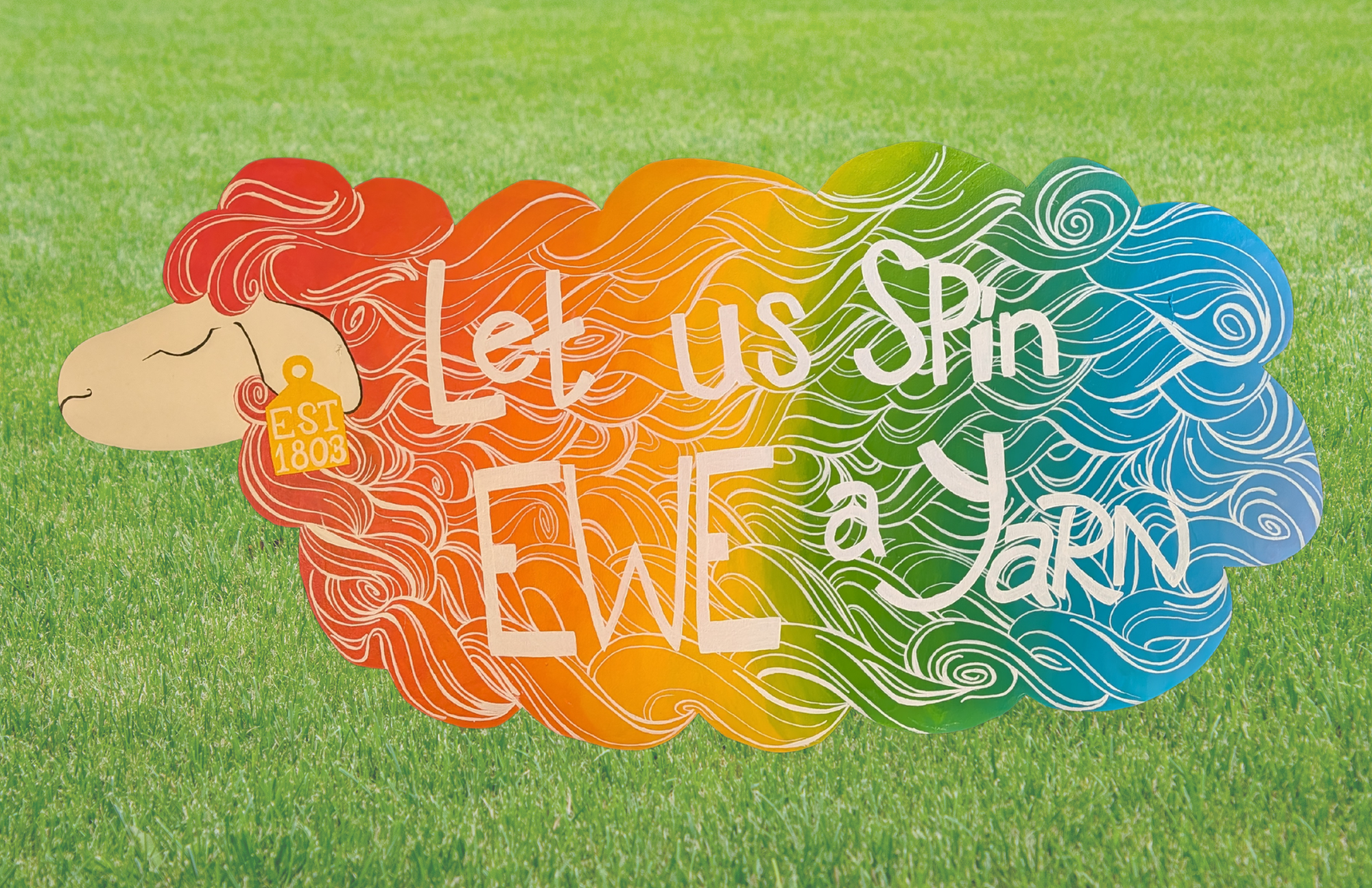
Come experience all that Worthington has to offer! Hand-painted with acrylic by artist Leigh Foust of Forever LoveLeigh Designs, this sheep is a colorful, whimsical celebration of everything that makes Worthington a special place to visit and call home.
From the award-winning Farmers Market to incredible local shopping, restaurants, and community celebrations, the design captures the vibrant, welcoming spirit at the heart of this community. Painted with love - and that signature dash of nonsense - it invites visitors to explore, linger, and discover why Worthington truly is a place like no other.
THE ORGANIZATION: EXPERIENCE WORTHINGTON
Experience Worthington was created in 2018 to celebrate the rich heritage, welcoming spirit, and vibrant local culture of Worthington, Ohio. The organization showcases a community where history and modern charm meet. A vibrant community that captures hearts through inspiring history and warm hospitality, Worthington offers meaningful connections at every turn.
Experience Worthington's mission is to highlight local businesses, historic districts, and signature events while fostering collaboration and civic pride. Through storytelling, promotion, and community engagement, it helps residents and visitors explore, enjoy, and feel at home in this uniquely inviting city.
THE ARTIST: LEIGH FOUST
Located in Worthington, Ohio, Forever LoveLeigh Designs creates whimsical hand-painted upcycled goods, original artwork, and prints inspired by vintage patterns and textures. Each piece is one of a kind, made with love, creativity, and a generous dash of nonsense. "No Hate, Only LoveLeigh" is the studio's guiding motto, and artist Leigh Foust Strives to be a safe, inclusive, and welcoming presence in the creative community.
From upcycled finds transformed into colorful keepsakes to original prints that celebrate the joy of everyday life, Forever LoveLeigh Designs brings warmth, whimsy, and heart to every piece-and to every corner of the Worthington community it calls home.
-
![]()
Worthington Area Chamber of Commerce
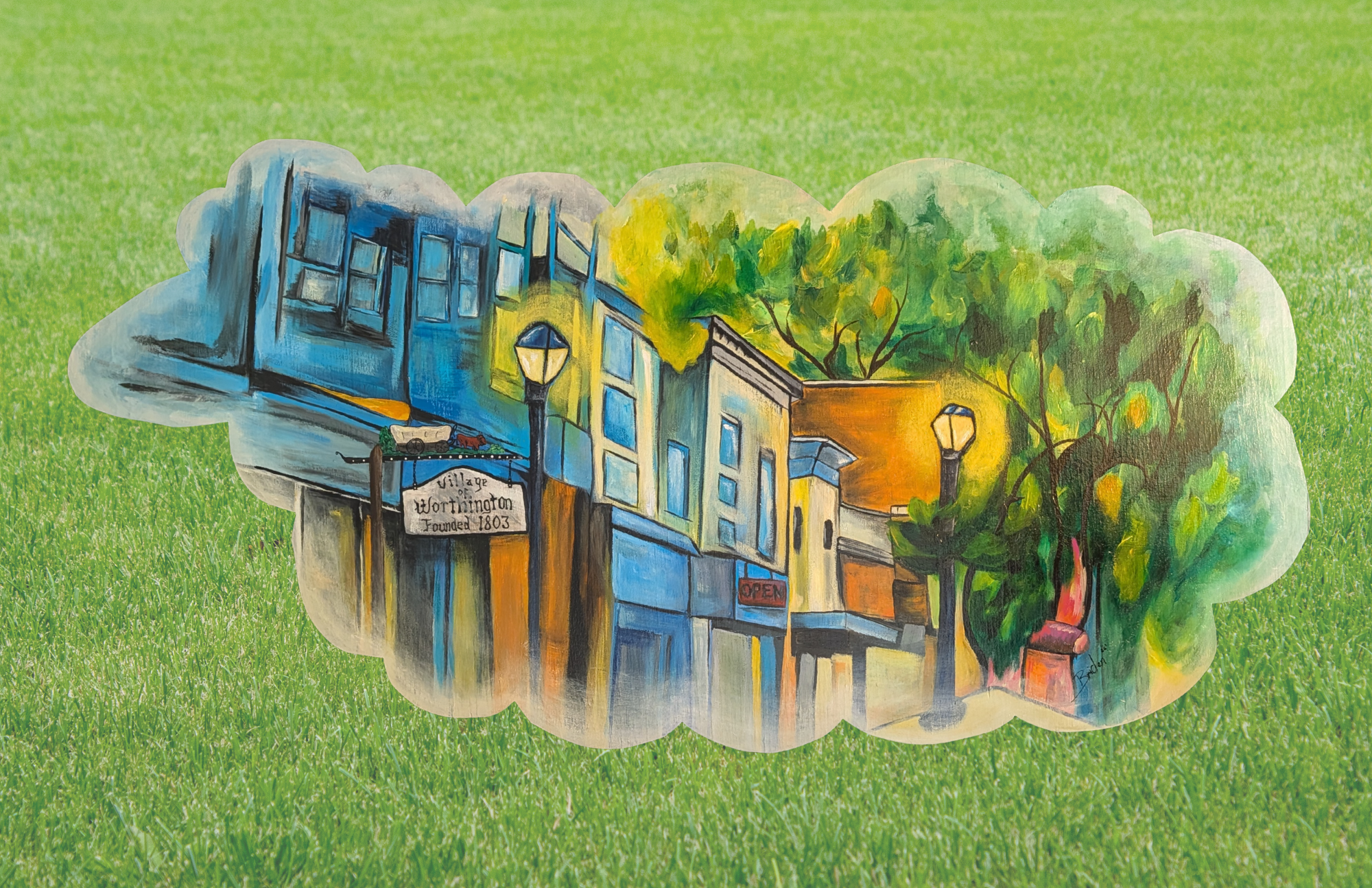
In celebration of America's 250th birthday, this painted sheep honors the agricultural roots that shaped Worthington, Ohio. Once a quiet symbol of the area's early farms, the sheep becomes a living tribute to the land, labor, and legacy that built the community. Across its form, an abstract painting of buildings lining Worthington's streets tells the story of a city growing through gathering, tradition, and shared identity. Gentle silhouettes capture everyday moments-a neighbor's handshake, a storefront flipping its sign to "Open"-reflecting the collaborative spirit that sustains local businesses. Subtle facades glow with warm interior light, symbolizing hospitality, resilience, and the belief that communities thrive when people support one another. The sheep stands as a reminder that Worthington's story, rooted in open fields, continues in the relationships, businesses, and shared purpose that carry it forward.
THE ORGANIZATION: WORTHINGTON AREA CHAMBER OF COMMERCE
Founded in 1958, the Worthington Area Chamber of Commerce serves as a vital connector between local businesses, community organizations, and public institutions. Representing more than 530 businesses across the greater Worthington area, the Chamber supports economic growth, professional development, and community engagement. Over the decades, it has helped strengthen Worthington's business environment through advocacy, networking, and collaborative initiatives that link the private and public sectors. Today, the Chamber continues to champion local enterprise and foster a thriving commercial community.
THE ARTIST: BRIDEN SCHUEREN
Briden Cole Schueren is an award-winning, internationally recognized queer trans artist, activist, and business owner based in Columbus, Ohio. They founded BrickBox Studios in 2013 to create a community-inclusive workspace for artists, and have organized fundraisers benefiting Trans Lifeline, Ohio Suicide Prevention, and the You Will Rise Program. Briden co-created Queertopia, a transformative art experience celebrating queer joy through paintings, workshops, and the Redrawing Masculinity class.
As a former Stonewall Columbus board member, they launched Columbus's first Trans Pride March and organized multiple Trans Day of Remembrance events. They've advocated for trans visibility at the Ohio Statehouse and presented on trans healthcare at Ohio State Medical Center. At the core of everything they do, Briden builds the spaces and communities they wish had existed for them when they were younger. More at Thatguysart.com
-
![]()
American Legion
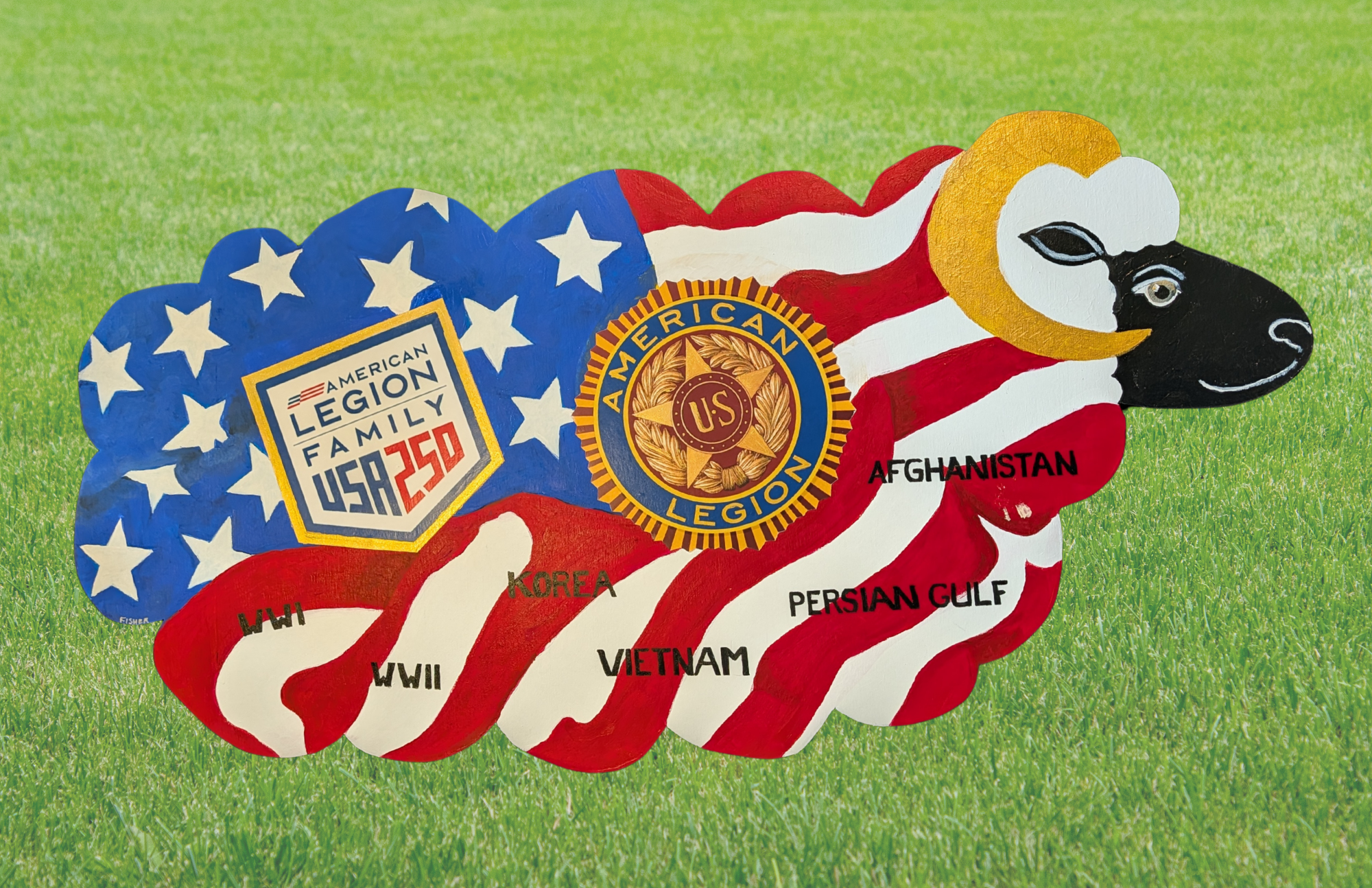
Founded by an act of congress after World War One, the American Legion has operated with a clear and enduring purpose: to serve those who have served, strengthen the nation, and uphold the virtues that define American democracy.
That purpose is built upon four foundational pillars: Veteran Affairs & Rehabilitation, National Security, Americanism, Children & Youth.
These pillars guide the organization's advocacy, outreach, and service across thousands of local posts, and millions of members nationwide.
This sheep celebrates the American Legion's Mission.
THE ORGANIZATION: AMERICAN LEGION
Founded in 1919 by returning World War I veterans, Worthington's American Legion Post quickly became a cornerstone of civic life. Originally named for General Charles B. Cooper, the post was soon renamed to honor Lawrence G. Leasure, the first local soldier to die in WWI, and later Tad Blackston, the first to die in WWII. Throughout its history, the post has supported veterans, hosted Memorial Day observances, organized community service projects, and provided youth programs such as Junior Baseball. After meeting in various locations for decades, the post established a permanent home in 1947. Today, it continues its strong tradition of service and remembrance.
THE ARTIST: JOYCE FISHER
A Baby Boomer, Joyce did not pursue the artist's career path everyone expected of her. But it was never far from her heart.
A Mayflower descendant from Massachusetts, she chose a career in business. After retirement she once again turned to her first love-painting. First as a hobby, taking local adult classes and experimenting with various art media, later taking a studio at the High Road Gallery in Worthington.
Encouraged by talented artist friends, her oil paintings have been seen in many shows, winning awards, and happily hanging in private collections in Ohio, Virginia, Massachusetts, Maine, California, Ireland and Japan.
She never expected this wonderful "Second Act." She hopes you enjoy her work.
-
![]()
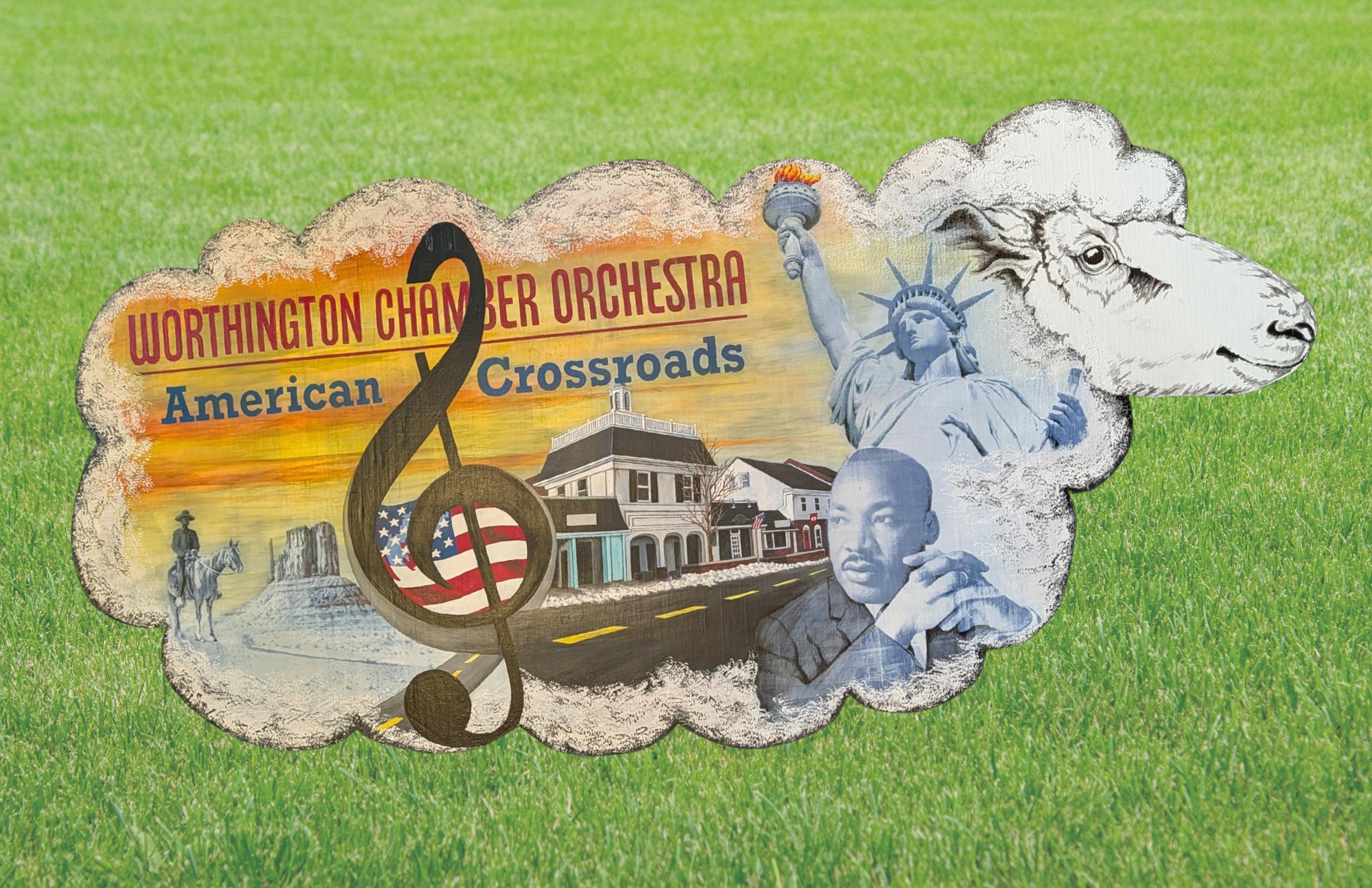
Worthington Chamber Orchestra
Representing the Worthington Chamber Orchestra's 2026 concert series, this sheep symbolizes their theme: "American Crossroads," a musical journey through the spirited intersections of culture, history, and art that have shaped our nation. Through bold programming and interdisciplinary collaboration, the series invites audiences to engage with the vibrant richness of America's past, present, and future.
THE ORGANIZATION: WORTHINGTON CHAMBER ORCHESTRA
Founded in 2013, the Worthington Chamber Orchestra was created to enrich the cultural life of Worthington and surrounding communities through high-quality musical performance.
Under the leadership of Executive, Artistic and Music Director Antoine T. Clark, the orchestra has grown into a dynamic artistic presence in Central Ohio. Known for its thoughtful programming and collaborative partnerships, the WCO is committed to expanding access to the performing arts and fostering community engagement. Through concerts, educational outreach, and creative initiatives, the orchestra continues to strengthen Worthington's cultural landscape.
THE ARTIST: SUE MOON-SWIHART
Sue Swihart is a multimedia artist and art educator at Worthington Kilbourne High School.
Specializing in wildlife and nature-inspired works, she combines cyanotype, watercolor, and gouache to create detailed, layered compositions. Originally from Hong Kong, Sue currently resides in Worthington and is a member of the Ohio and Worthington Art Leagues. She has exhibited her work at the Bryn Du (past winner of The Ohio Magazine Art Award), OAL Art Shows along with a solo exhibition at the Gateway to the Arts.
-
![]()
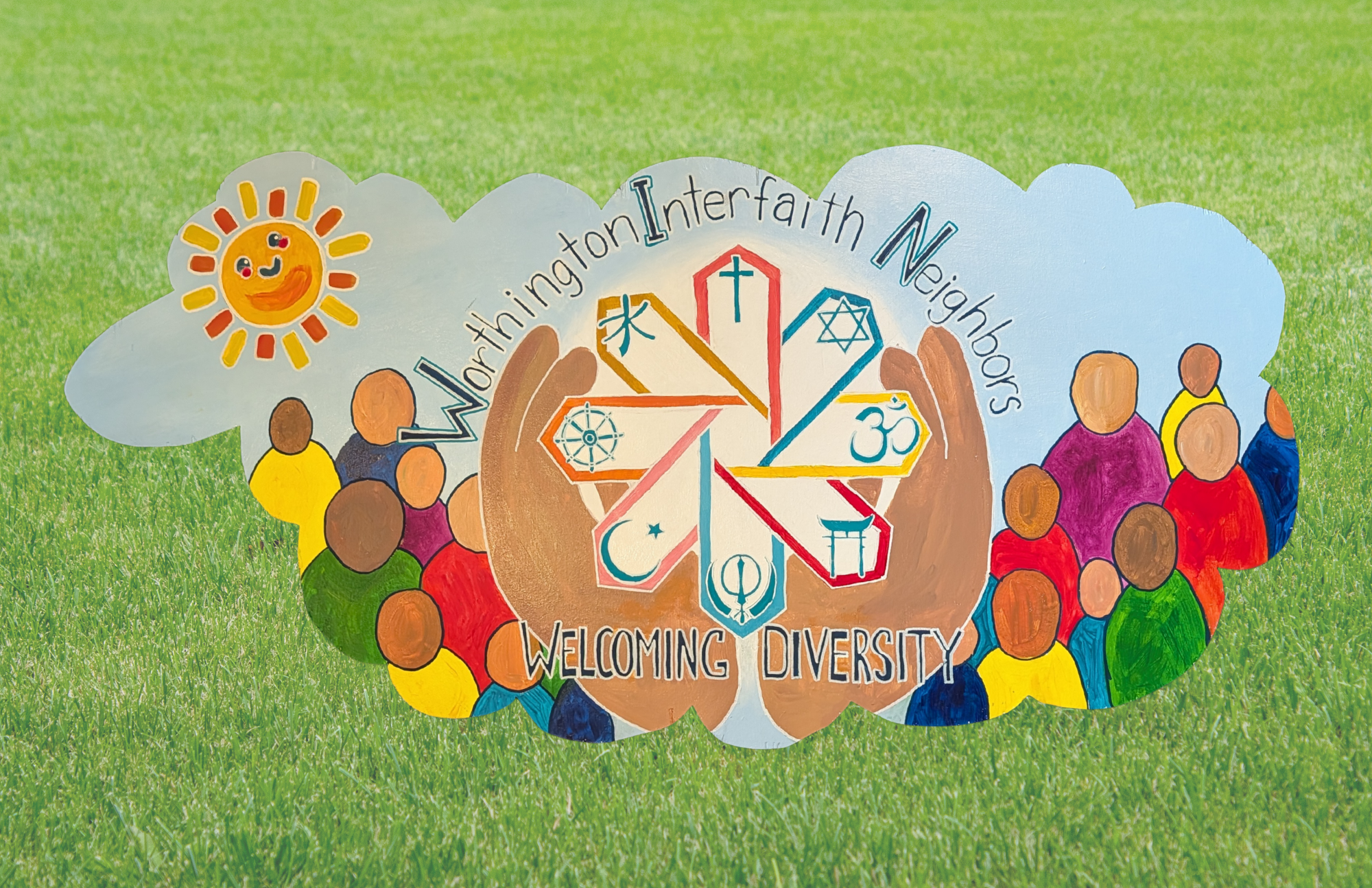
Worthington Interfaith Neighbors
This sheep is a bold and joyful expression of the values that guide Worthington Interfaith Neighbors. Featuring the WIN logo surrounded by a rich variety of faces representing the diversity of the Worthington community, the design pairs imagery with a simple but powerful message: "Love thy neighbor." Created by resident High Road Gallery artist Megen Leigh in her signature watercolor and fluid ink style, the piece reflects the whimsy and warmth she brings to all her work. It is an open invitation to see every face in the community as a neighbor worthy of welcome, respect, and care.
THE ORGANIZATION: WORTHINGTON INTERFAITH NEIGHBORS
Worthington Interfaith Neighbors (WIN), was founded in 2015 to strengthen community relationships in Worthington as the city's faiths and cultures became more diverse.
Established by Kay Labosky, Barbara McVicker, and Linda Karr, WIN started programs like Conversation Partners, Peace Ambassadors, Sharing Our Stories, and the Festival of Faiths and Nations to bring people together. WIN has partnered with Beth Tikvah, the Turkish American Society of Ohio, the Ahlul Bayt Islamic Center and local churches to promote understanding, inclusion, and meaningful dialogue among Worthington's diverse residents.
WIN has also worked with community groups such as the Worthington Partnership, Worthington City Schools, the Community Relations Commission, and WIFA. WIN's mission continues to center on connection, education, and interfaith collaboration.
THE ARTIST: MEGEN LEIGH
Megen Leigh is an artist living in Westerville, Ohio, who grew up immersed in the science fiction and fantasy community. Working primarily in watercolor and fluid inks, she creates whimsical, imaginative landscapes and playful abstracts that reflect that rich creative upbringing.
Her work strikes a balance between dreamlike wonder and painterly precision-inviting viewers into worlds that feel both familiar and fantastical. Megen is a resident artist at High Road Gallery in Worthington and regularly exhibits at fine arts festivals throughout the Midwest, sharing her vibrant and imaginative vision with audiences across the region.
-
![]()
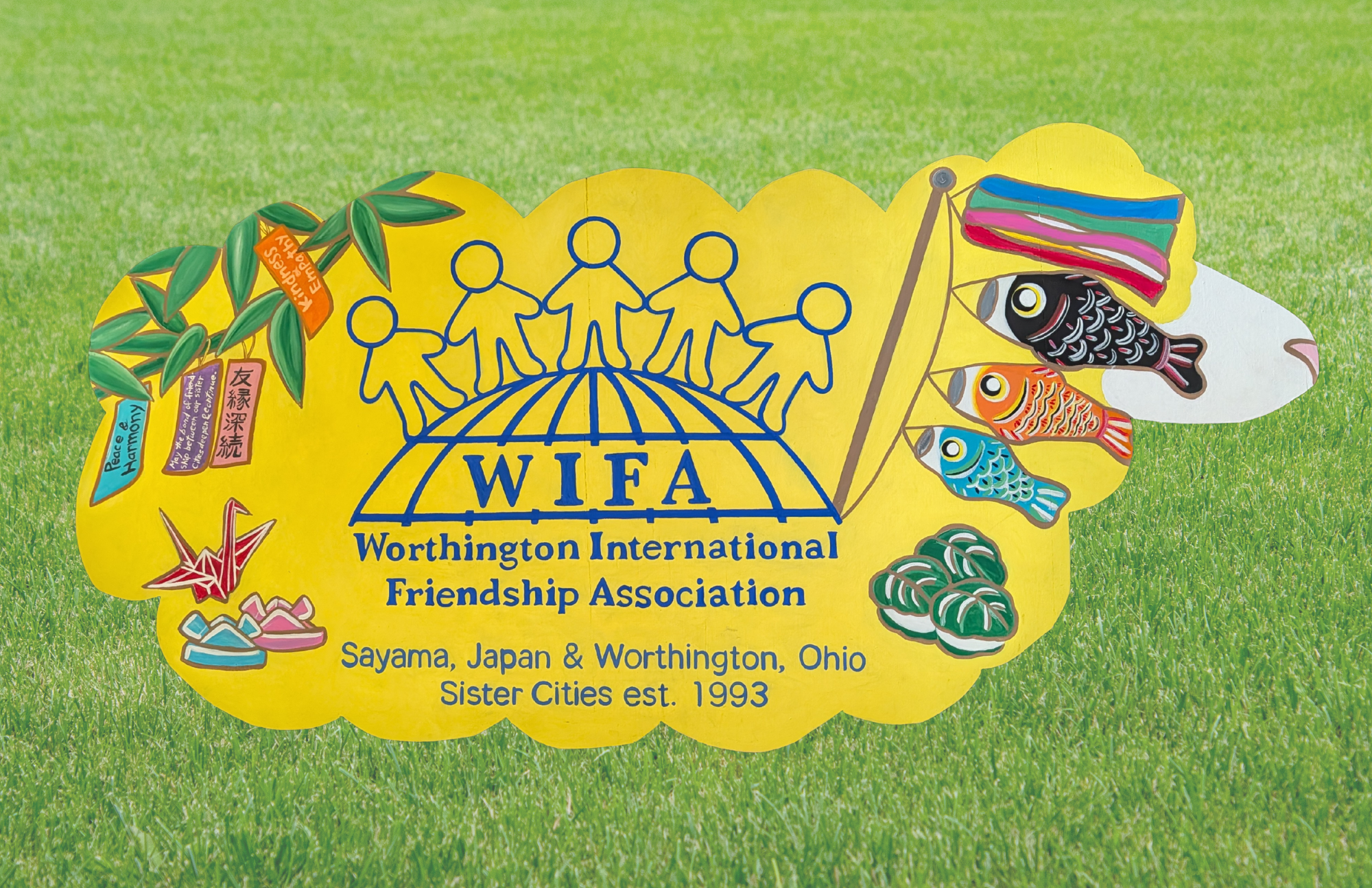
Worthington International Friendship Association
In this depiction of the Worthington sheep, artist Yani Sheng weaves in symbolism honoring Worthington's sister city, Sayama, Japan.
Cultural elements thoughtfully integrated throughout the design reflect the enduring international bond between the two communities.
At the heart of the piece sits the emblem of the Worthington International Friendship Association, representing unity, collaboration, and the spirit of global friendship that is deeply rooted in Worthington's identity. The design is a visual celebration of the connections that transcend borders-honoring both the local community and the wider world it has chosen to embrace.
THE ORGANIZATION: WORTHINGTON INTERNATIONAL FRIENDSHIP ASSOCIATION
The Worthington International Friendship Association (WIFA) promotes global understanding by fostering relationships between Worthington and international communities. Since establishing ties with Sayama, Japan in 1993, the two cities have built a vibrant sister-city partnership, celebrating their 25th anniversary in 2024.
Over the decades, hundreds of residents, students, athletes, and officials have participated in exchanges that deepen cultural appreciation and mutual respect. WIFA also hosts cultural dinners, lectures, and international programs that highlight global traditions and perspectives.
Guided by the belief that understanding diverse cultures is essential in a connected world, WIFA continues to strengthen Worthington's international relationships.
THE ARTIST: YANI SHENG
Born in Taiwan, raised beneath the vibrant skies of Belize, and shaped by her studies in Canada, Yani Sheng carries the landscapes of three cultures within her work. Now rooted in Columbus, Ohio, she continues to explore identity, resilience, and belonging through her creative practice. Living with dyslexia profoundly shaped Yani's journey-what once presented itself as an obstacle became a catalyst for empathy, persistence, and creative problem-solving
Guided by determination and a deep love for visual expression, she earned her B.F.A. in Visual Art and Bachelor of Education from Memorial University. Yani transforms personal challenge into artistic strength, weaving her multicultural background and lived experience into every piece she creates, producing work that is as emotionally resonant as it is visually compelling.
-
![]()
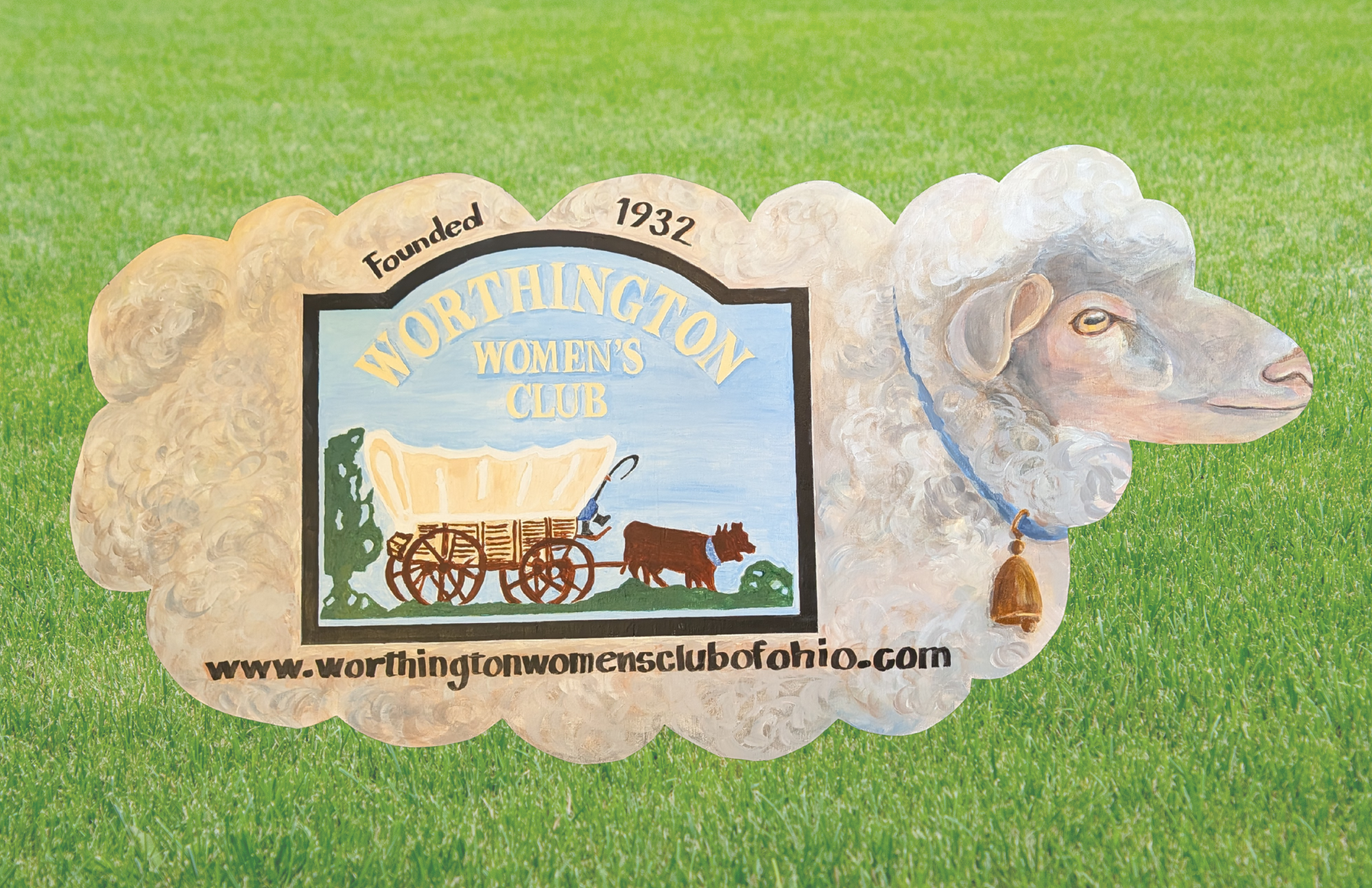
Worthington Women's Club
The Worthington Women's Club has stood for friendship, community service, and the empowerment of women since its founding. For their sheep, the club chose a quietly confident, minimalistic approach-displaying their organization's plaque and contact information alongside a simple collar and bell.
The design reflects the club's belief that strength doesn't need to shout. With clean lines and purposeful simplicity, the sheep stands as a gentle but clear symbol of the club's enduring mission: to promote friendship, benefit the community, and foster meaningful connection among the women of Worthington.
THE ORGANIZATION: WORTHINGTON WOMEN'S CLUB
Established in 1932, the Worthington Women's Club was founded to promote friendship shared interests, and community involvement among local women. Beginning with 74 charter members, the club grew rapidly and became a major civic force. Over the decades, it contributed to community projects including historical markers, village entrance signs, and the construction or restoration of fireplaces in public buildings.
The club has supported schools, libraries, scouts, and numerous local organizations through annual allocations. With more than 30 active interest groups, the club remains a vibrant community institution dedicated to service, fellowship, and preserving its long-standing traditions.
THE ARTIST: DEB HALLER
Educated as a graphic designer, Deb Haller has been an active and celebrated member of the Worthington art community for over 21 years. She is a resident artist at High Road Gallery, a member and former president of the Worthington Area Art League, and a member of Central Ohio Plein Air.
An award-winning painter, Deb has participated in numerous solo and group exhibitions both locally and internationally, including several shows at the McConnell Arts Center-most notably the Worthington/Sayama Art Exchange. Her work reflects a deep love for the Worthington community and a career built on creative dedication, artistic growth, and meaningful connection with fellow artists and audiences alike.
-
![]()
Community Relations Commission
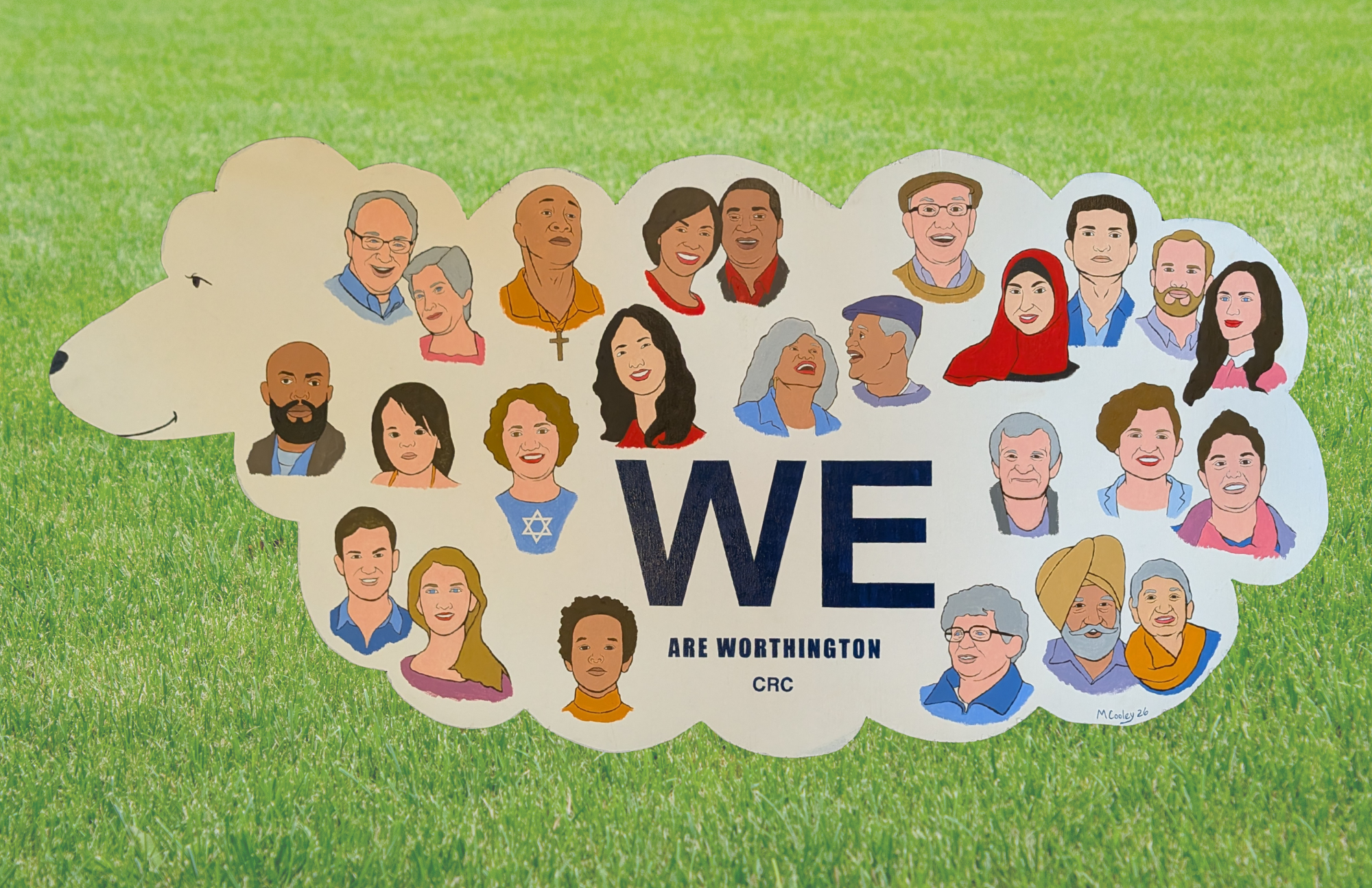
This sheep is a celebration of America's 250th anniversary and the rich diversity of people who call Worthington, Ohio home. Created by Michael A. Cooley of Cooley Studios in partnership with the Community Relations Commission, the painting reflects a community that is growing, welcoming, and thriving.
Every Worthingtonian deserves to be seen, heard, and represented-and this work captures exactly that spirit. With bold, expressive portraiture rooted in the classical realist tradition, the painting declares with pride and conviction: this is who we are, and together, we make Worthington great.
THE ORGANIZATION: COMMUNITY RELATIONS COMMISSION
Worthington's Community Relations Commission traces its roots to the Worthington Area Human Relations Council, a church-based organization formed in the mid-20th century to address race relations, employment practices, housing, and education. For more than twenty years, the council served as a strong community voice before its legacy continued through the City-established Community Relations Commission.
Today, the CRC advises City Council on issues of fairness and equality and sponsors programs such as the Good Neighbor Award, SEEN Grant Program, and the Martin Luther King Community Celebration. Through partnerships, public dialogues, and initiatives focused on youth, aging, and racial justice, the CRC works to promote an atmosphere of mutual understanding and cooperation among all members of the Worthington community.
THE ARTIST: MICHAEL COOLEY
Michael A. Cooley is the founder of Cooley Studios in Worthington, Ohio. He began drawing at age five, received his first portrait commission at sixteen, and went on to earn a B.S. in Medical Illustration from Ohio State University and an M.F.A. in Illustration from the University of Hartford. Cooley later pursued advanced classical academic fine art training with leading realist instructors across Ohio, New York, and Chicago.
Founded in 2012, Cooley Studios serves as his hub for medical illustration, portrait commissions, and classical fine art instruction. His breadth of training-spanning drafting, commercial illustration, medical illustration, and classical realism-equips him to bring extraordinary skill and depth to every work he creates.
-
![]()
Worthington Farmers Market
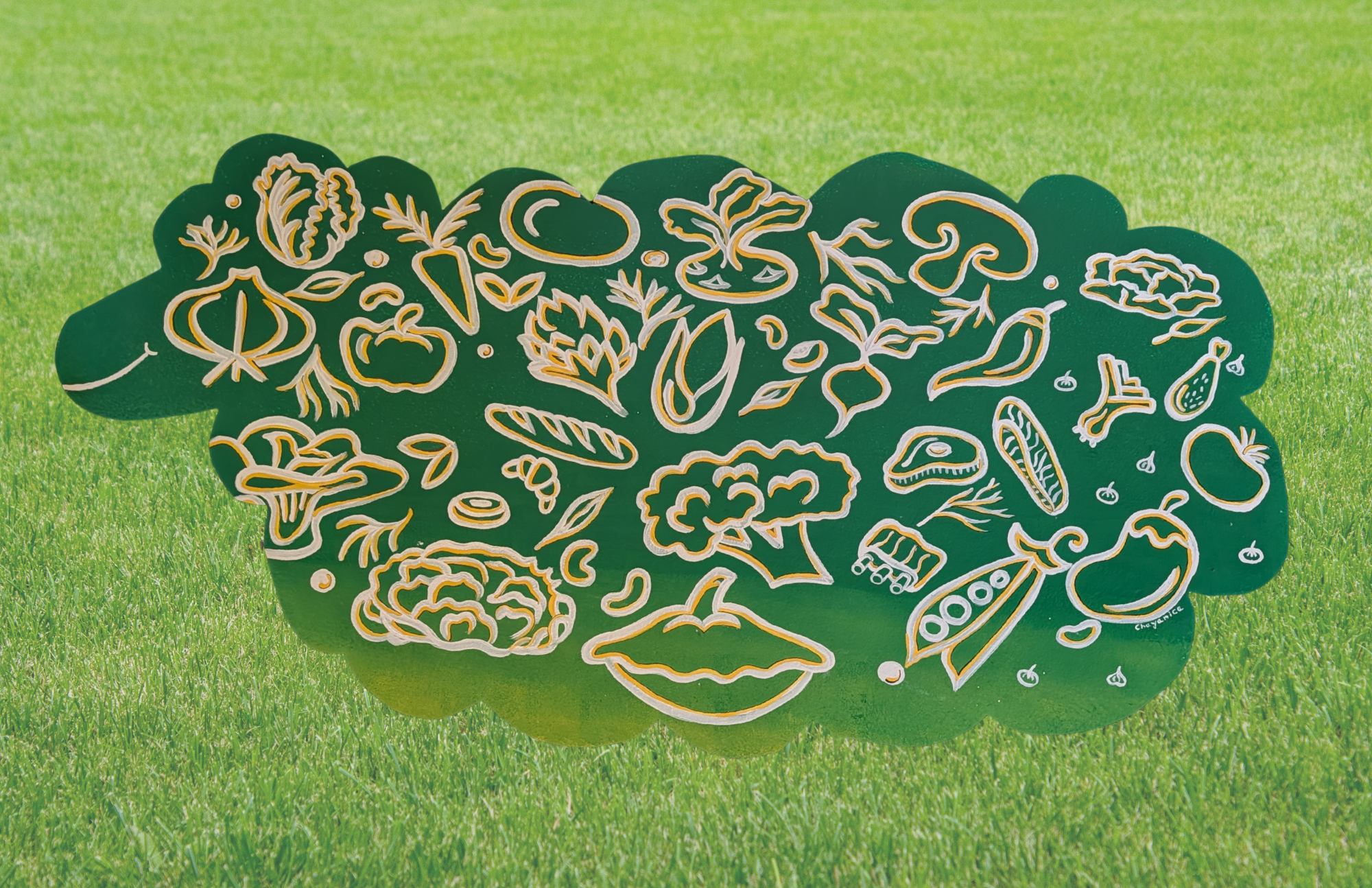
The Essence of the Farmers Market is a living memory of the harvest. Artist Chayanica Choudhury gathered the vibrant hues of vegetables, the deep luster of seasonal fruits, and the warmth of fresh-baked bread to drape across this sheep in celebration of community and abundance.
The work is not merely a depiction of food-it is a tribute to the rhythmic vitality found only at the market, where neighbors gather, seasons change, and everyday life becomes something beautiful. Set playfully on a cardboard sheep, the piece transforms a simple trip to the Farmers Market into a kaleidoscopic celebration of the 250th anniversary of America.
THE ORGANIZATION: WORTHINGTON FARMERS MARKET
Established in 1987 by Old Worthington businesses, the Worthington Farmers Market began as an effort to draw visitors into the historic district. Over time, it evolved into a beloved year-round community tradition. Now operated by The Worthington Partnership, the market brings together local farmers, food producers, and artisans, offering fresh, seasonal goods and fostering connections between growers and residents. Its longstanding presence reflects Worthington's commitment to supporting local agriculture, small businesses, and vibrant public gathering spaces.
THE ARTIST: CHAYANICA CHOUDHURY
Chayanica Choudhury was born in 1987 and raised in the vibrant cultural landscape of New Delhi. A self-taught artist whose passion for the canvas was ignited early, she holds a postgraduate degree in Commercial Art & Graphic Designing. Her work is defined by Intricate details, complex motifs, and richly woven patterns across both canvas and fabric.
Chayanica works primarily in vibrant acrylics and expressive pastels, blending her technical foundation with a lifelong dedication to traditional artistry.
Beyond her studio practice, she is a dedicated art teacher who finds great joy in nurturing the creative talents of young, aspiring artists-sharing the same love for visual storytelling that has guided her own remarkable journey.
-
![]()
The Worthington Partnership
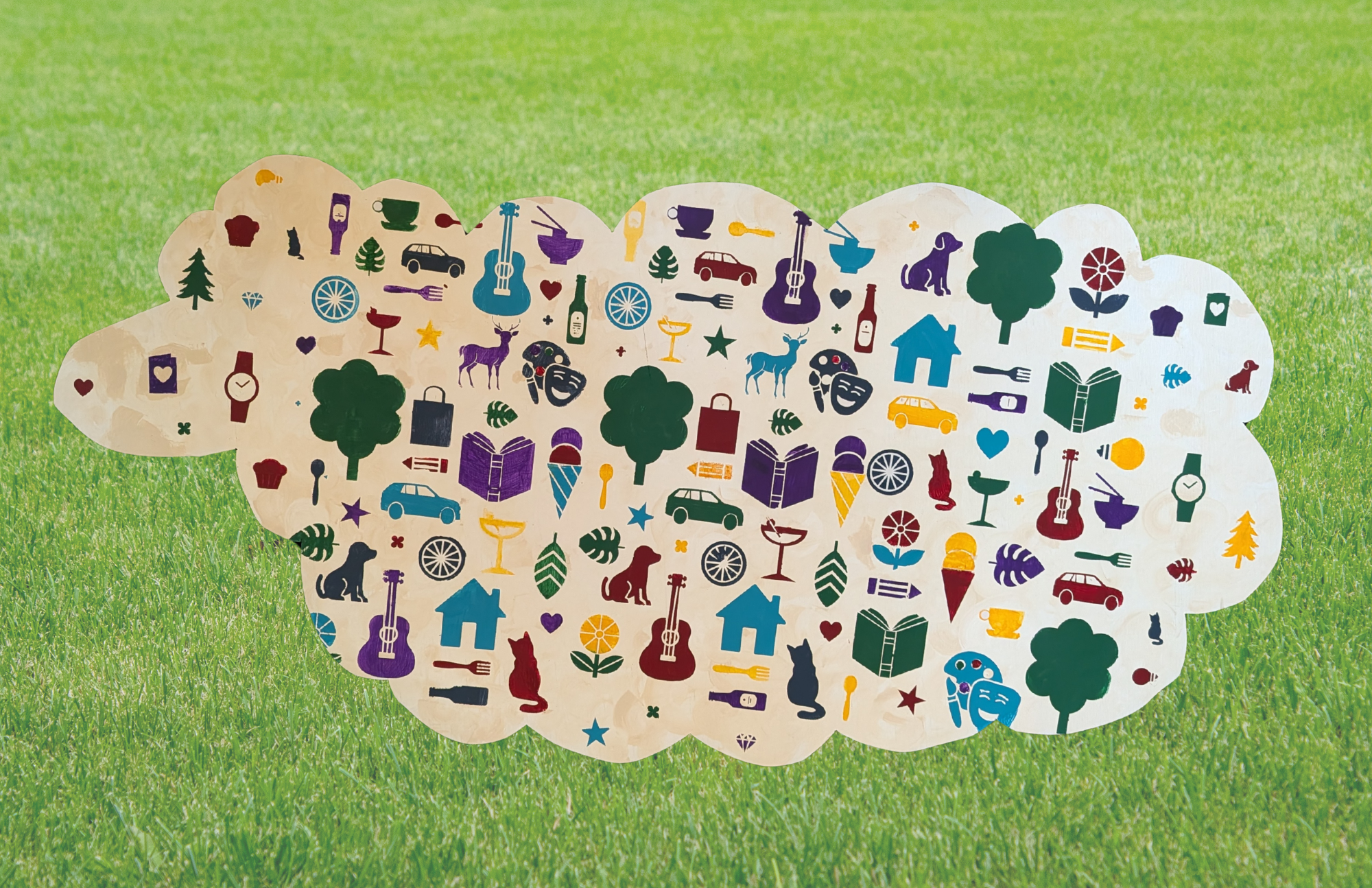
This sheep wears the history of Worthington's business community as a vibrant, wearable pattern. Designed by Allison Chapman of lgloo Letterpress, the pice draws on the rich legacy of local commerce and the events and traditions that have brought the community together over the years.
The pattern also highlights the work of the Worthington Partnership, celebrating signature community events like the Holiday Open House that have helped define the character and spirit of Worthington. It is a tribute to the local businesses and the partnerships that keep a community thriving.
THE ORGANIZATION: THE WORTHINGTON PARTNERSHIP
The Worthington Partnership is a volunteer-driven nonprofit dedicated to enhancing the city historic core and strengthening community life. Evolving from the Olde Worthington Busines Association, the organization now leads major community events, supports local businesses, and promotes tourism. Its initiatives-from the Farmers Market to seasonal celebrations-help preserve Worthington's historic character while encouraging economic vitality and civic engagement. The Partnership also advocates for walkability, sustainability, and the protection of community assets.
THE ARTIST: ALLISON CHAPMAN
Allison Chapman is the owner of lgloo Letterpress, a printing and bookbinding studio rooted in the craft of fine letterpress printing. She has lived and worked in Worthington for 17 years, becoming an integral part of the local creative community. Through Igloo Letterpress, Allison brings together traditional printmaking techniques with contemporary design sensibilities, producing distinctive work that celebrates the artistry of the printed page.
Allison's deep familiarity with Worthington's business landscape and community events informs her creative practice, and she brings that same thoughtful attention to every project she takes on-whether in the studio or contributing to the vibrant cultural life of Worthington.
-
![]()
Worthington Resource Pantry
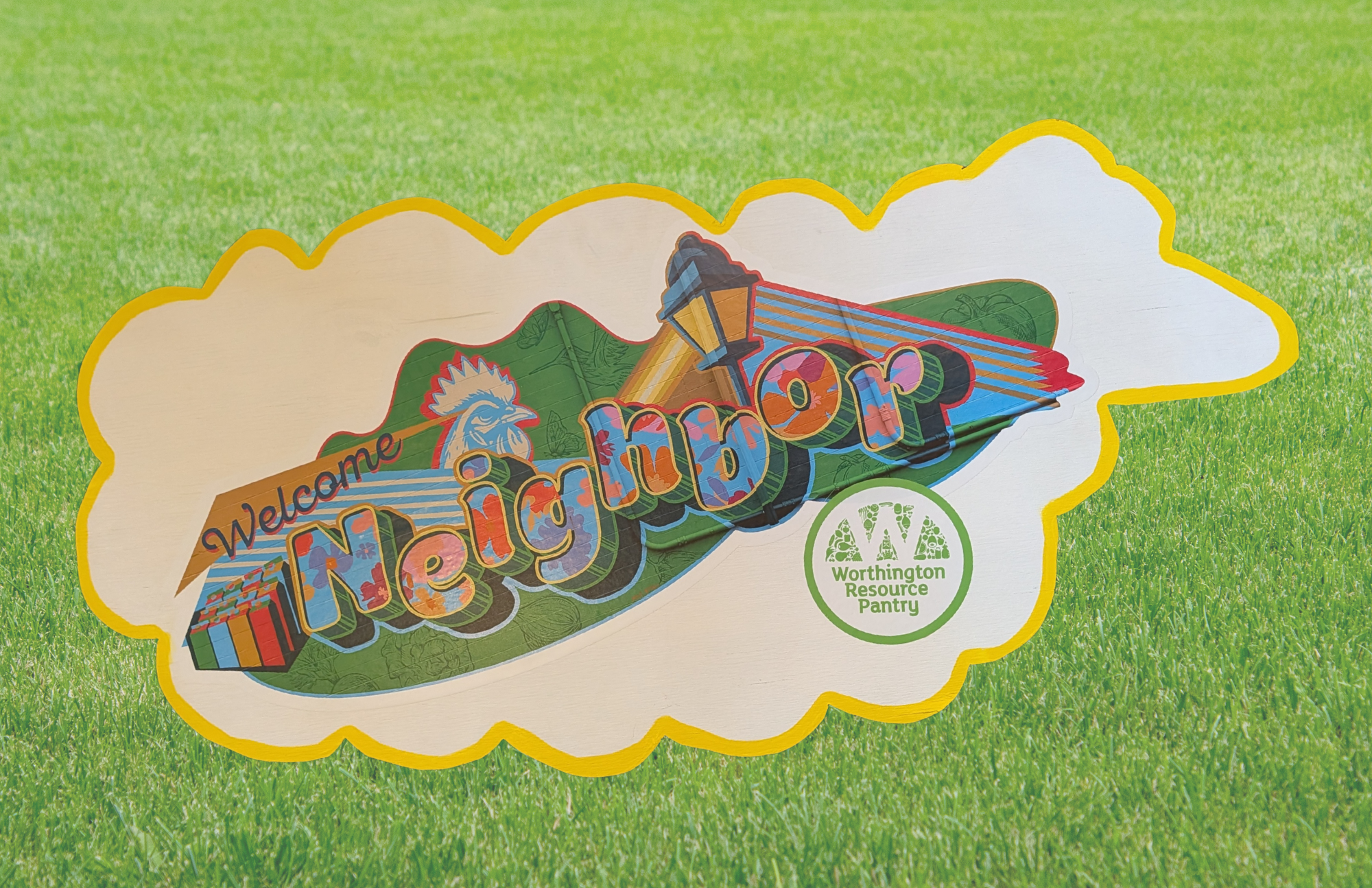
This design draws inspiration from the Pantry's "Welcome Neighbor" mural, a reflection of who we are and who we serve. Every day, neighbors walk through our doors, each with their own story, and each deserving of dignity, care, and connection. The mural captures that sense of belonging, where everyone is welcomed and no one stands alone. This sheep carries that same message forward. It represents the idea that a Pantry is more than a place to pick up food. It is a place where people come together, where relationships are built, and where community grows stronger. At its heart, this piece is about neighbors helping neighbors and creating a space that feels warm, open, and truly welcoming.
THE ORGANIZATION: THE WORTHINGTON RESOURCE PANTRY
Since 2009, the Worthington Resource Pantry has worked to ensure that no neighbor goes without essential food and personal care items. Serving residents across northern Franklin and southern Delaware counties, the pantry offers fresh produce, dairy, meats, shelf-stable foods, diapers, and personal care items in a grocery store-like environment. Its services include homebound delivery, pop-up pantries, and a resource center connecting families to vital social services. By fostering a community of dignity, it empowers neighbors to bridge the gap between their income and their most basic needs.
THE ARTIST: NICK STOLL
Nick Stoll is an artist whose work focuses on connection, place, and the everyday moments that bring people together. Franklin Imaging commissioned Nick to create an original piece for the Worthington Resource Pantry ahead of the opening of our new location in June 2025. His work reflects the spirit of community that defines the Pantry and the neighbors we serve. Through this partnership, Franklin Imaging helped bring that vision into a new format by providing a printed version of the artwork for this sheep. The piece carries forward a shared commitment to creativity, collaboration, and supporting a stronger, more connected community.
-
![]()
Worthington United Methodist Church
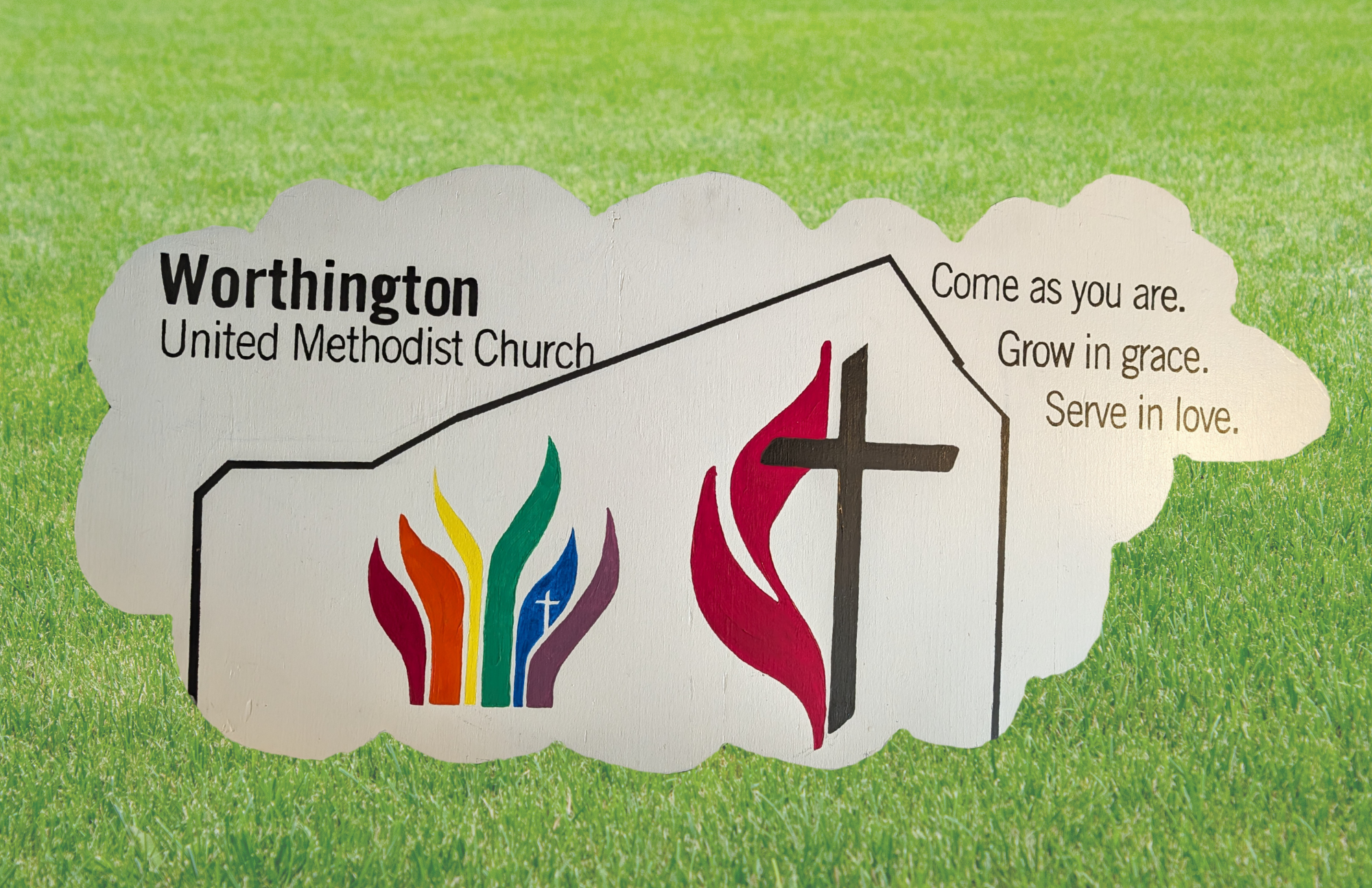
This sheep pays tribute to the structural beauty and spiritual heart of Worthington United Methodist Church. Designed in collaboration with the congregation, the work features a structural outline of the church's sanctuary alongside its most recognizable symbols: the cross and flame of the United Methodist tradition and the Reconciling Ministries Network symbol, representing radical welcome and inclusion.
Woven throughout is the church's mission statement - "Come as you are. Grow in grace. Serve in love" - a phrase that speaks to both the congregation's faith and its open, affirming character. It is a portrait not just of a building, but of a community of belonging.
THE ORGANIZATION: WORTHINGTON UNITED METHODIST CHURCH
Tracing its roots to 1808, Worthington United Methodist Church is one of the community's earliest religious institutions. Its history spans four successive buildings, beginning with the first structure built in 1823—the first building in Worthington used exclusively as a church. As the congregation grew, new sanctuaries were constructed in 1864, 1926, and 1968, each reflecting the needs and spirit of its era. The church has long served as a spiritual and community anchor, adapting its ministries while preserving its historic legacy.
THE ARTIST: ELIZABETH WARD
Elizabeth Ward is an oil surrealist painter based in Worthington, Ohio. With a background in fashion design, Elizabeth made the leap to painting in 2022 and hasn't looked back. Her work is known for its humor and wit-often inspired by misheard phrases, misunderstood lyrics, or whatever happens to be trending at the moment. Bright, bold, and playful, her paintings offer a colorful twist on everyday life.
Her work has been featured in 614 Magazine, The Scribe, and numerous local makers markets. The church’s inclusive spirit and mission - "Come as you are. Grow in grace. Serve in love" -aligns beautifully with her own creative philosophy.
-
![]()
McConnell Arts Center
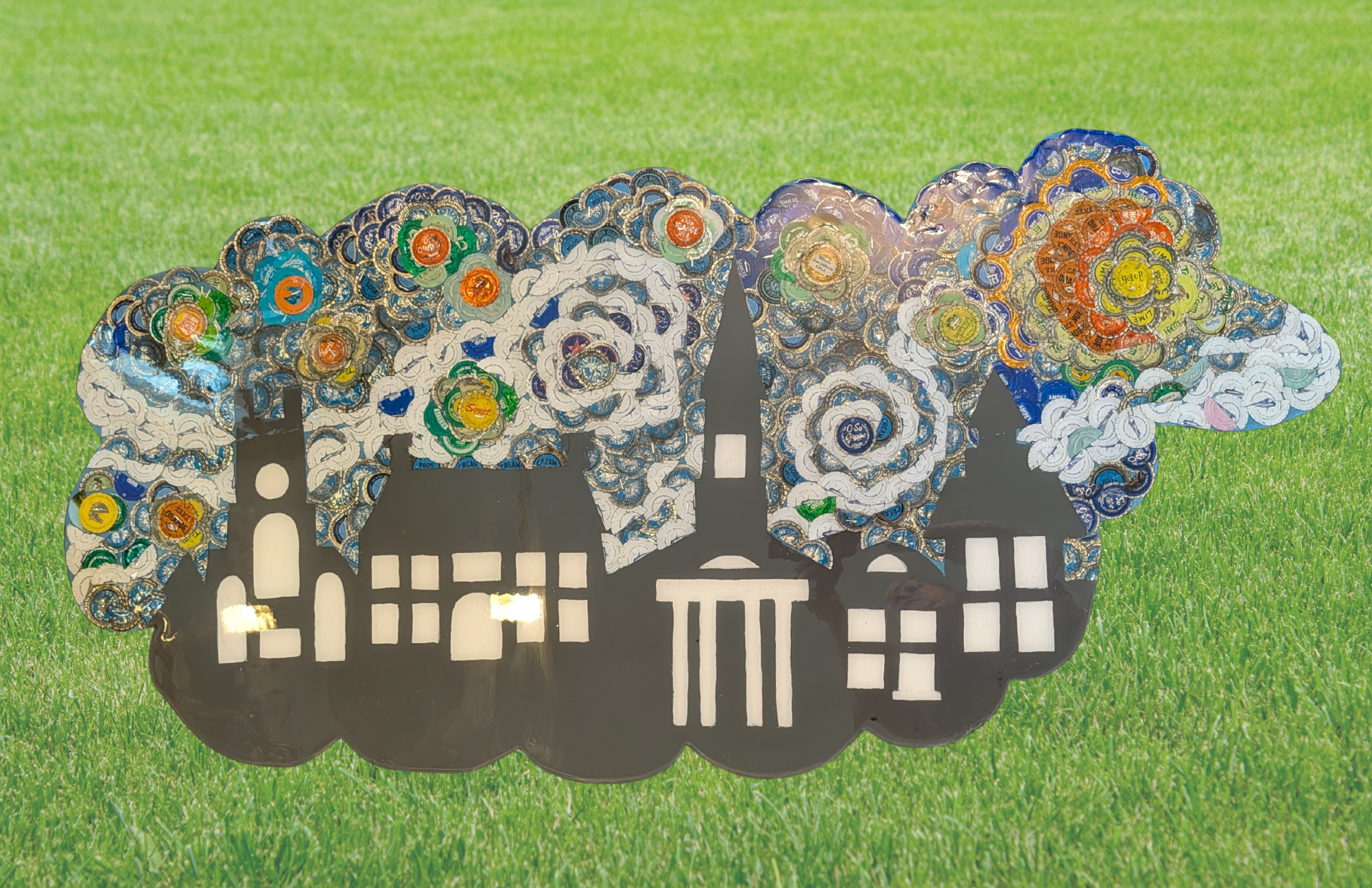
Starry Night in Worthington is a playful and imaginative tribute to both a timeless masterwork and a beloved community. Artist Michelle Geissbuhler reimagines Vincent Van Gogh's iconic "The Starry Night" using an unexpected medium: bottle caps, combined with Worthington's own logo.
The result is a tactile, eye-catching work that bridges fine art history with local identity, inviting viewers to look closely and discover the familiar within the extraordinary. It is a celebration of creativity, resourcefulness, and the enduring power of art to transform everyday materials into something truly memorable.
THE ORGANIZATION: MCCONNELL ARTS CENTER
Opened in 2009, the McConnell Arts Center transformed the former 1916 Worthington High School into a vibrant cultural hub. Designed by architect Frank Packard, the building served multiple educational roles before sitting vacant. Its adaptive reuse preserved the historic structure while creating galleries, classrooms, and performance spaces that support visual, performing, and literary arts. Today, the MAC continues to honor its educational past by fostering creativity, community engagement, and artistic exploration for all ages by building pathways to experience the joy and wonder of the arts.
THE ARTIST: MICHELLE GEISSBUHLER
Longtime Worthington resident Michelle Geissbuhler was part of the committee that raised funding to convert the original Worthington High School into the McConnell Arts Center, and has volunteered there in various capacities since its founding. A versatile creator, she works across many media including oil painting, collage, and mixed-media assemblage.
Her “TinFolk” assemblages, along with albums and journals made from vintage books and serving trays made from leftover cabinet doors and hardware, are available at Pizazz Gift Shop in The Shops at Worthington Place. Michelle's work has earned significant recognition, including "Best in Show" at Gateway Arts Council's Spring Fling (2024) and "Best in Show (Amateur Division) at the Ohio State Fair (2019).
Her art reflects a deep connection to Worthington's community and a joyful exploration of materials both old and new.
-
![]()
High Road Gallery & Studios
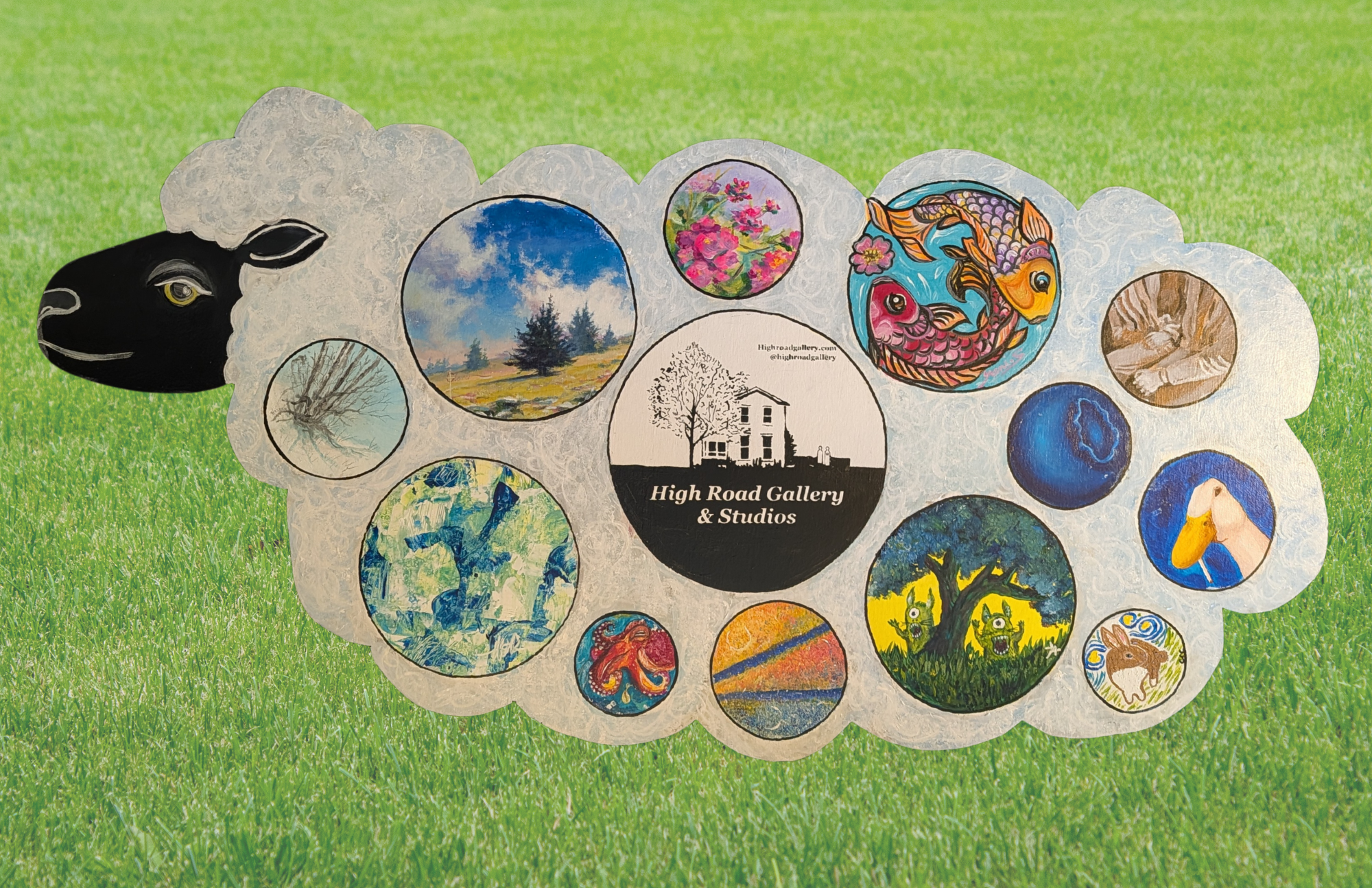
This sheep features original artwork created by twelve resident artists from High Road Gallery & Studios in historic Worthington. Located in a National Register of Historic Places-listed 1818 house at 12 East Stafford Avenue, High Road has been Worthington's oldest continuously operating gallery since 2001. Each of the twelve contributing artists brought their own style and vision to the piece, resulting in a dynamic, collaborative work that reflects the creative energy and community spirit at the heart of High Road. Open Friday and Saturday afternoons, the gallery invites you to visit, meet the artists, and experience the adventure of art being made.
THE ORGANIZATION: HIGH ROAD GALLERY & STUDIOS
High Road Gallery & Studios is a nonprofit artist-run collective housed in the historic Buttles-Pinney-Brown House, a Federal-style brick residence built c. 1818. The gallery invites visitors into working studio spaces, offering a unique opportunity to observe artistic processes and view works in progress. As stewards of the 200-year-old home, the organization preserves its architectural character while providing a welcoming space for exhibitions, events, and community engagement.
THE ARTISTS: RESIDENT ARTISTS
High Road Gallery & Studios is home to twelve working resident artists whose studios are open to the public, offering visitors a rare glimpse into the creative process. Located in a historic 1818 house at 12 East Stafford Avenue in Worthington-listed on the National Register of Historic Places-High Road Gallery has presented year-round exhibitions by local artists since 2001, making it Worthington's oldest gallery.
The twelve artists contributing to this sheep represent a rich diversity of styles, media, and perspectives, united by a shared commitment to art, community, and the vibrant creative culture of historic Worthington. Visit Friday and Saturday afternoons to meet the artists and explore their work.
-
![]()
Daughters of the American Revolution
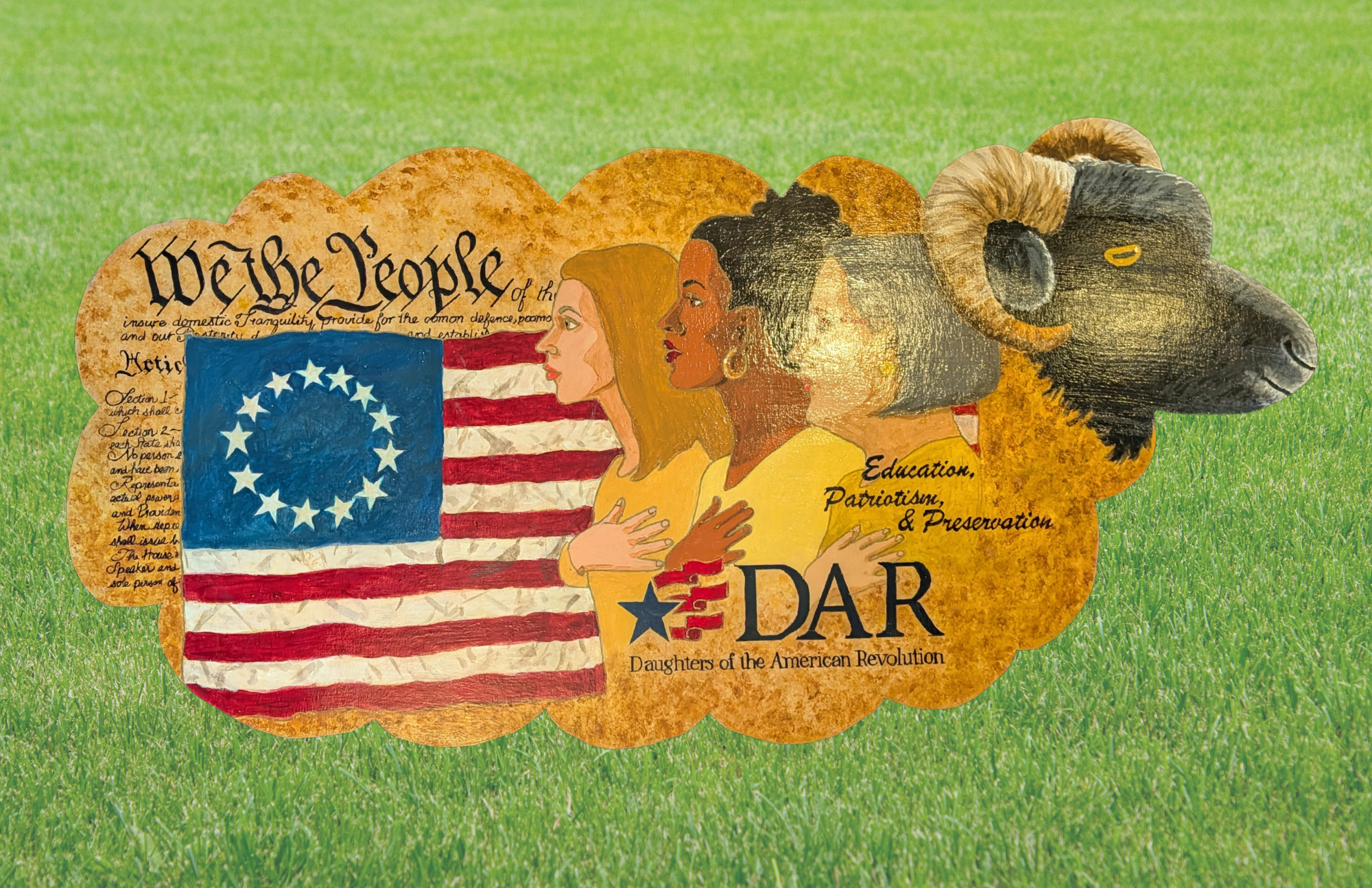
This artwork celebrates the enduring spirit of patriotism embodied by the Worthington Chapter of the Daughters of the American Revolution. Three women stand in silhouette with their hands over their hearts, a powerful gesture of devotion to the ideals that shaped the nation. Beside them, a flag bearing thirteen stars in a circle evokes the earliest days of the Republic and the sacrifices of the patriots whose legacy continues to inspire.
The words of the Preamble to the Constitution flow across the composition, reminding viewers of the foundational promise of "We the People." This piece reflects the chapter's dedication to remembering the past while serving the present, celebrating the values that continue to unite generations in the pursuit of a more perfect union.
THE ORGANIZATION: DAUGHTERS OF THE AMERICAN REVOLUTION
The Worthington Chapter of the Daughters of the American Revolution is part of a national women's service organization founded in 1890 during a resurgence of patriotic interest.
Membership is open to women who can trace their lineage to Revolutionary War patriots. The chapter supports veterans, promotes historic preservation, and invests in youth through scholarships and school supply drives. Its activities include hosting Wreaths Across America, commemorating Constitution Week, and supporting active-duty service members.
THE ARTIST: LYNN BIRD
Lynn McMakin Bird's professional career in retail advertising led her to freelance illustration, design, and painting. Her past work includes logos for the Columbus Zoo, Envoy Inns, and Ohio State Fair; children's book illustration; signage for the Columbus Zoo and Franklin County Metro Parks; and finished art for Ohio History Connection and the Oregon Trail Museum.
More recently, Lynn has created illustrations for the Worthington Historical Society, including a large mural about the settlement of Worthington, which can be found at the Orange Johnson House. She is a transplant to Worthington, has traveled the world, and has had a longtime love affair with the outdoors and gardening. She remains grateful to be a new member of the Worthington Chapter of Daughters of the American Revolution, to continue service to our Worthington community.
-
![]()
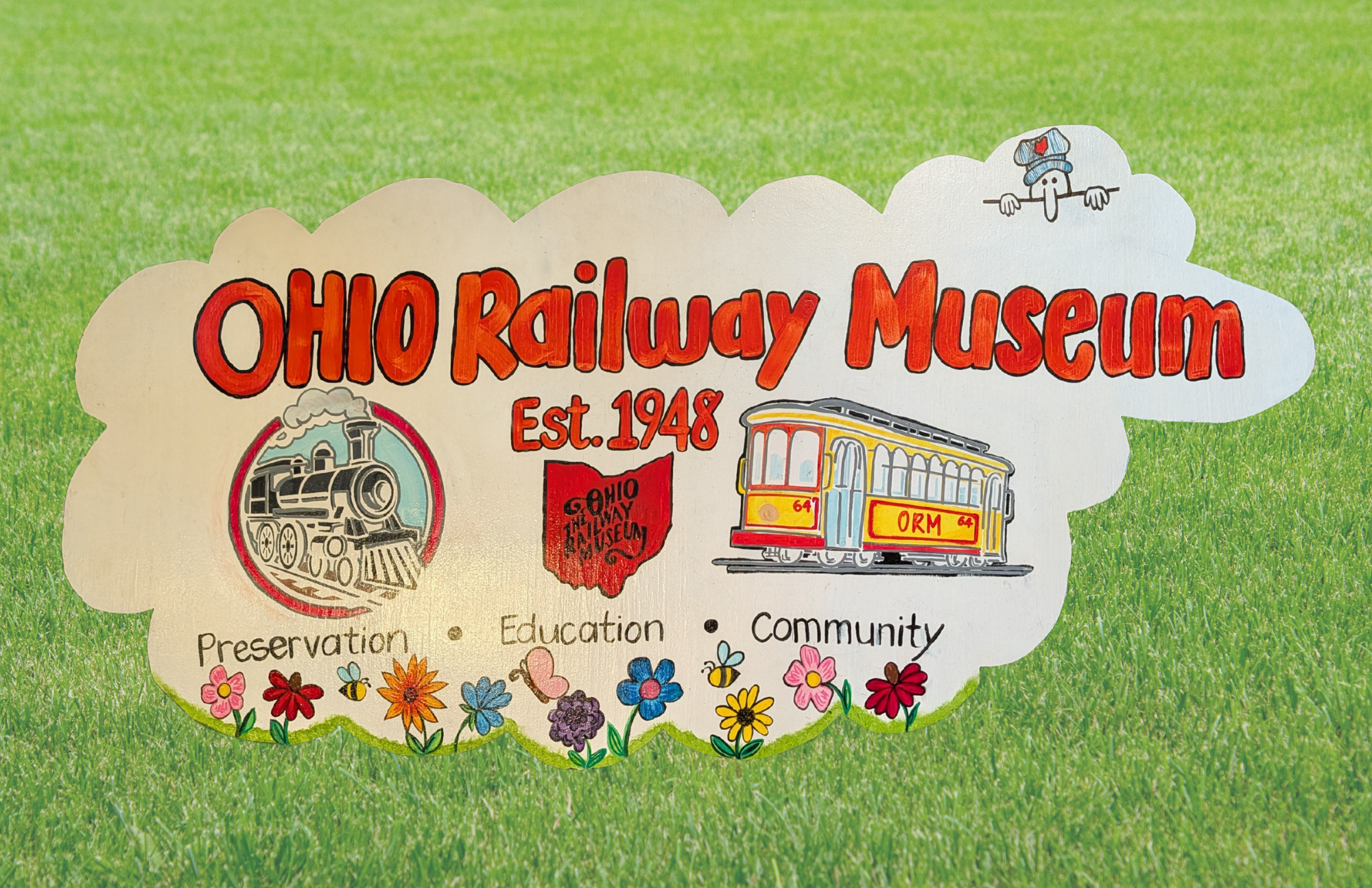
Ohio Railway Museum
Since 1948, the Ohio Railway Museum has been a proud cornerstone of Worthington. As the fourth oldest railway museum in the United States, we are dedicated to preserving Ohio's rail history. Every vintage locomotive, passenger, and freight car on our grounds has a unique story, offering a fascinating gateway to our past.
They operate just over a mile of the former Columbus, Delaware and Marion interurban line, giving visitors a hands-on connection to Ohio's electric railway heritage. As custodians of several historic structures, we help protect and share unique chapters of Worthington's past. Our museum is entirely volunteer-driven, and we welcome anyone eager to support local history - whether you're a train enthusiast or just want to make a difference. Join us in keeping our railroad legacy alive for future generations.
THE ORGANIZATION: OHIO RAILWAY MUSEUM
Founded in 1948, the Ohio Railway Museum is one of the nation's oldest railway museums, dedicated to preserving and interpreting the history of rail transportation. Its first acquisition, Ohio Public Service Interurban Car #21, is listed on the National Register of Historic Places.
Located on the historic Columbus, Delaware & Marion railbed, the museum offers exhibits, historic equipment, and vintage streetcar rides. Its collection highlights the evolution of rail travel and its impact on Ohio's development.
THE ARTIST: LAUREN FRUHWIRTH
Lauren Fruhwirth is a dedicated volunteer at the Ohio Railway Museum, as well as a mother and teacher. She shares her artistic talent to enhance the museum experience.
Visitors often notice her vibrant and creative signs displayed during special events. Her charming illustrations capture the energy and dedication of the museum's volunteers. We appreciate Lauren's commitment and the creativity she brings to our community. Her artwork helps tell the museum's story and creates a welcoming atmosphere for everyone.
-
![]()
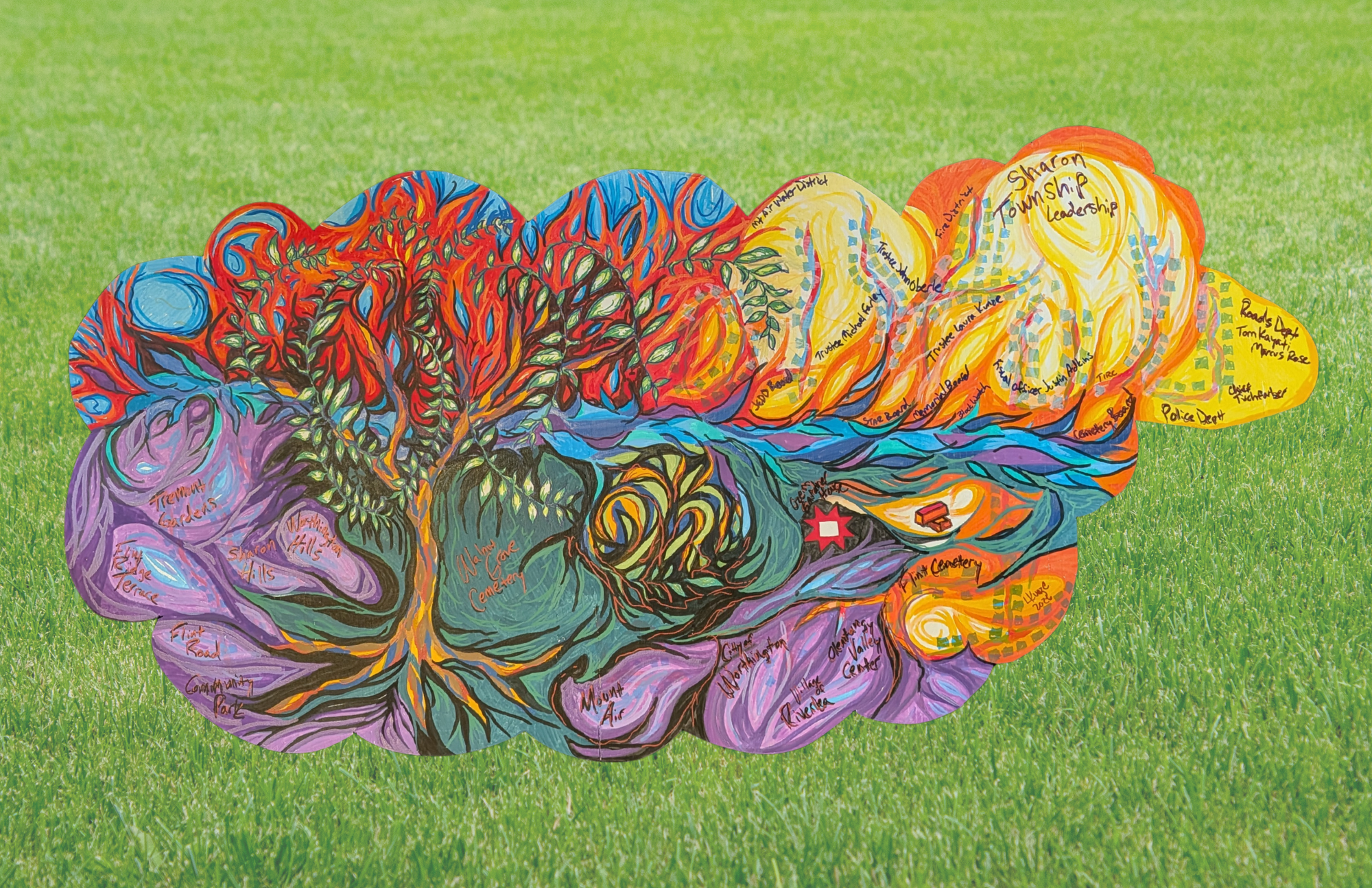
Sharon Township
The Sharon Township sheep includes imagery that reflects the distinct neighborhoods in the township, with the theme of water and fire. Anchoring the image is a large walnut tree. Sharon Township manages two joint cemeteries with the City of Worthington, Walnut Grove and Flint Cemeteries. Sharon Township operated what is now the Worthington Fire/EMS until 1994 and we are now in the Fire District. On the north end of the township near Flint Cemetery, stands the Ozem Gardner house and historic neighborhood of Flint Ridge Terrace. The Ozem Gardner house was a part of the underground railroad and is being restored. The "north star" image on the sheep pays homage to this history.
Connected by the Olentangy River and appreciation of the
"township way of life," our neighborhoods and residents enjoy small, accessible and very lean local government, our own police and roads departments, and also our local amenities in Worthington, Columbus and Westerville. We truly have the best of all worlds.
THE ORGANIZATION: SHARON TOWNSHIP
Established in 1806, Sharon Township originated from a 16,000 acre portion of Liberty Township and was settled by members of the Scioto Company beginning in 1803 Worthington was laid out within the township's boundaries in 1804, and the township soon became home to early civic institutions, including post office service, schools, and local government. Over time, much of the township was annexed by surrounding cities, leaving a collection of unincorporated "islands" that remain today.
THE ARTIST: LAURA KUNZE
Laura Kunze has been a Sharon Township trustee since 2018 and has lived in both Worthington (incorporated) and unincorporated areas of Sharon Township for over 35 years. Her career began as an art therapist, trained at Harding Hospital by Bruce and Cathy Moon in a program affiliated with Lesley University in Cambridge, MA. Don Jones, a longtime resident of Riverlea and one of the founders of the American Art Therapy Association, had brought art therapy to the Harding campus many years ago. Laura loves and appreciates the township, it's people and history of the various neighborhoods. She wanted to highlight the township and its relationship to Worthington and intersection with state and national pathways.
-
![]()
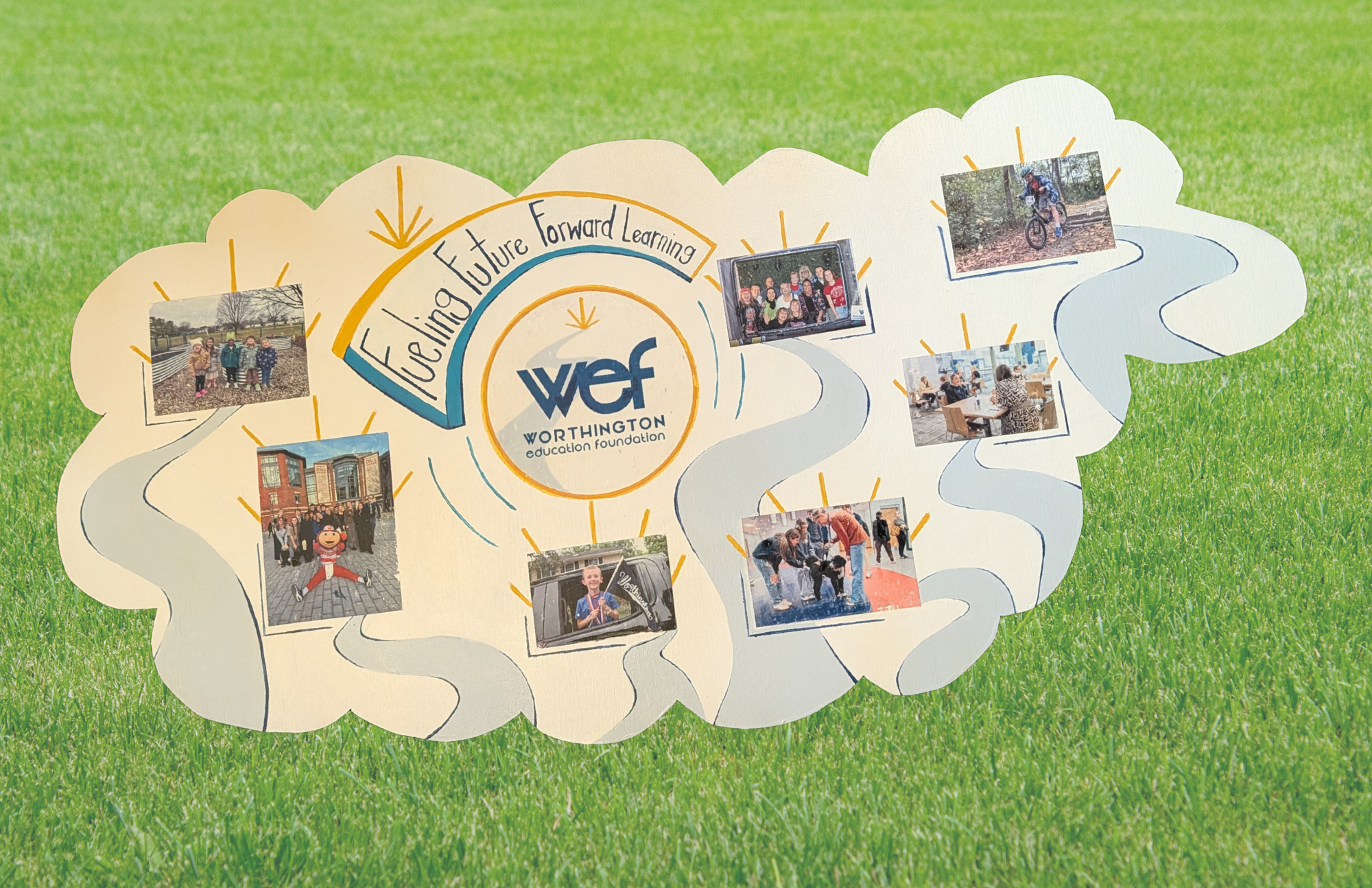
Worthington Education Foundation
This sheep was inspired by the smiling faces of students impacted by the work of the Worthington Education Foundation! Featuring the WEF logo and highlighting pictures from our grant and community engagement projects throughout the school district. The artwork demonstrates how the WEF's mission of fueling future forward learning, brings to life educator's big ideas and enriches the experience of Worthington students of all grade levels, interests, and backgrounds. It is a celebration of the innovation, creativity and joy this organization sparks within our community.
THE ORGANIZATION: WORTHINGTON EDUCATION FOUNDATION
Formed in 1988 by community leaders, the Worthington Education Foundation was created to support innovative educational opportunities beyond what public funding could provide. WEF awards grants that enrich classroom learning, encourage creativity, and enhance student experiences across Worthington Schools. By investing in projects that extend beyond the standard curriculum, the foundation helps educators bring new ideas to life and ensures that students benefit from exceptional learning environments.
THE ARTIST: GRETCHEN DINNEEN
Gretchen Dinneen has been a Worthington Education Foundation board trustee since 2022. Her creative vision is responsible for the memorable themes and décor of the WEFS past two large fundraising events, as well as our signage and social media graphics. She feels passionately that the dedicated staff and students who make our schools outstanding deserve community support. She is an avid volunteer for her children's schools also serving as PTSA president at Thomas Worthington. She and her husband live in the district with their three children.
-
![]()
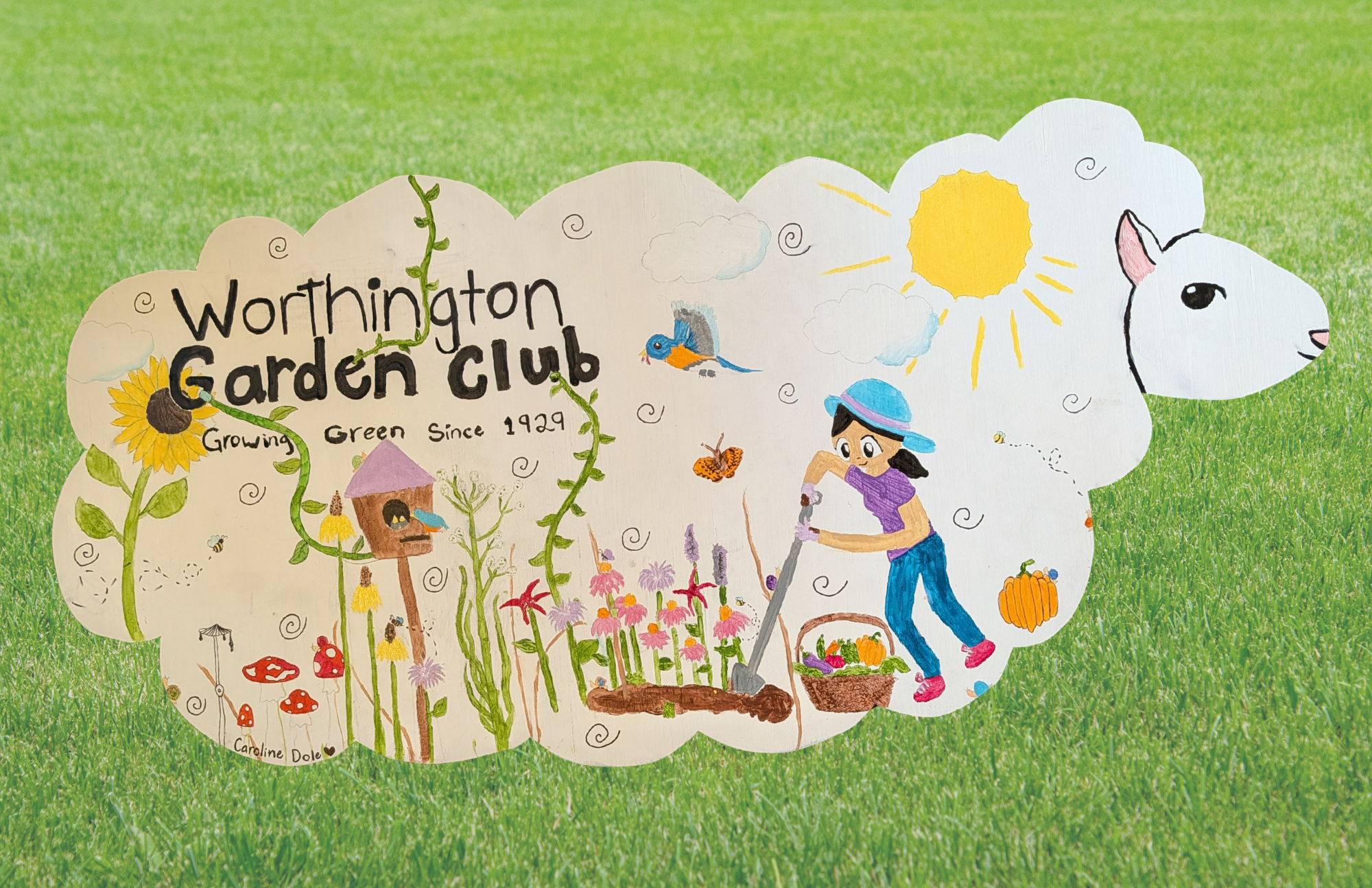
Worthington Garden Club
This sheep is a lively celebration of the natural world, bursting with native plants, flowers, mushrooms, birds, insects, vegetables, vines, and a dedicated gardener tending the scene. Native species including sunflower, purple coneflower, beebalm, blazing star, and rattlesnake master grow alongside vegetables like tomato, pumpkin, carrot, and eggplant.
The habitat teems with bees, snails, eastern bluebirds, and butterflies. Curly cues evoke soft wool, and many of the plants and animals mirror those intentionally grown at the historic Orange Johnson House garden-connecting this display to Worthington's rich horticultural heritage and the Garden Club's enduring love for the living landscape.
THE ORGANIZATION: WORTHINGTON GARDEN CLUB
Founded in 1929, the Worthington Garden Club has long promoted a love of gardening, thoughtful landscape design, and community beautification. Originally a women only, the club expanded membership to include men as associate members in 1931 and later as full participants. Its mission emphasizes cultivating an appreciation for plants, encouraging pride through intentional planning and planting, and supporting conservation efforts. Today, the club sponsors educational programs, focuses on the benefits of native plants, hosts an annual native plant sale, and serves as caretaker of the WHS's Orange Johnson House gardens, where members maintain historically accurate 1800s kitchen gardens and a thriving pollinator pathway.
THE ARTIST: CAROLINE DOLE
Caroline Dole is a fifth-grade student at Evening Street Elementary School in Worthington, Ohio. A granddaughter of a Worthington Garden Club member, Caroline brings a young artist's fresh perspective and genuine enthusiasm to this project.
Inspired by the natural world and her family's connection to the Garden Club's mission of celebrating native plants and community green spaces, Caroline's work reflects the joy, curiosity, and creativity that young artists bring to their communities. Her participation in this project is a testament to the Garden Club's commitment to passing a love of nature and art on to future generations.
-
![]()
Worthington Libraries
The colorful charm of picture books, the imaginative doodles of young library patrons, and the storybook architecture of the Old Worthington Library influenced the bright, child-like design of our sheep. Inspired by both Worthington's foundation in learning and the playful collages of Eric Carle, our sheep is an exploration in texture, creativity, and imperfection.
Its scrappy, tangled appearance is an embodiment of the insatiable journey to learn and become someone new much like The very Hungry Caterpillar). The library hopes to be part of that journey for every curious person who walks through our doors.
THE ORGANIZATION: WORTHINGTON LIBRARIES
Worthington Libraries traces its origins to 1803, when James Kilbourne and the Scioto Company brought a subscription library of books from Connecticut to the new community they founded. Over the next two centuries, the library operated from several locations in Old Worthington before establishing the Old Worthington Library at its current site, with groundbreaking on July 4, 1978 and opening day in 1979.
Today, Worthington Libraries includes three branches - the Old Worthington Library, Northwest Library and Worthington Park Library. Deeply rooted in community support, the system continues to provide essential services, innovative programming, and a strong connection to the residents it serves.
THE ARTIST: RACHEL NITCHMAN
Rae is a visual artist whọ moved to Columbus for college, got comfy, and never left! Their art is sometimes whimsical, other times moody, and always a shock of vibrant colors and bold lines. She uses art as an act of comfort and finds a lot of peace through the careful act of carving an image out of empty space. She currently works at Old Worthington Library.
-
![]()
Kidstuff Preschool
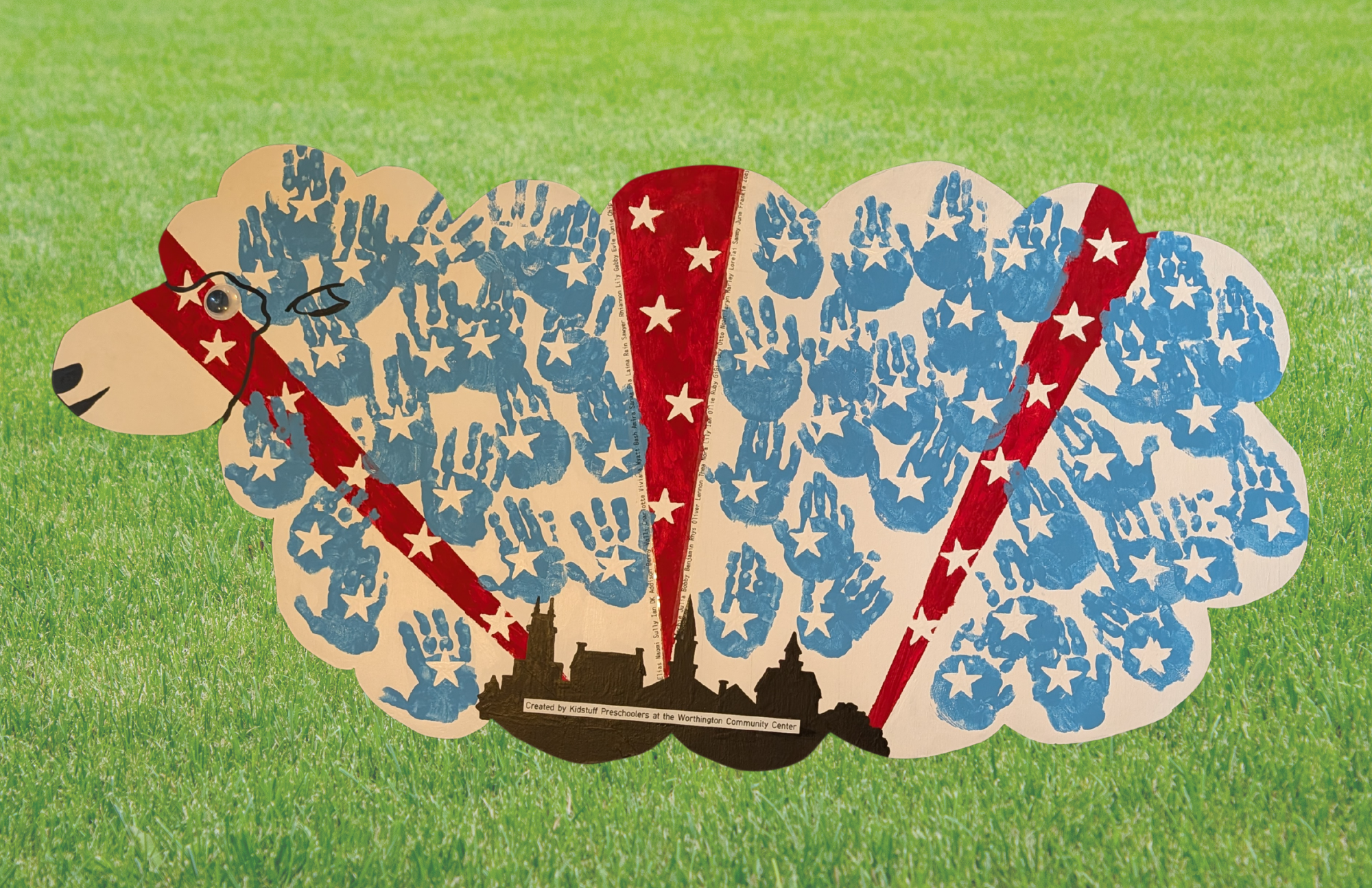
Created by the young students of Kidstuff Preschool, this sheep celebrates the youngest members of the Worthington community and the small moments that make a big impact. Designed with colorful handprints, it reflects the creativity, energy, and joy that children bring to everything they touch.
Kidstuff Preschool, part of Worthington Parks & Recreation, provides a play-based learning environment that nurtures early childhood development with a strong emphasis on social comfort and well-being. By contributing to this community project, these young artists are already living out the program's mission-building community, one small handprint at a time.
THE ORGANIZATION: KIDSTUFF PRESCHOOL
Worthington's Department of Parks & Recreation was established in 1974 to oversee the development, maintenance, and operation of the city's parks, facilities, and recreational programs. Under director Bill Poling, the department guided the creation of new amenities, including the Worthington Community Center, which opened in 1977 and quickly became a hub for community activity.
Over time, the department expanded its offerings to include cultural programming, fitness services, and year round recreation. Today, Worthington Parks & Recreation manages the Worthington Community Center, the Griswold Center, and more than 200 acres of parkland, continuing its mission to create community through exceptional parks, programs, facilities, and events.
THE ARTISTS: KIDSTUFF PRESCHOOL STUDENTS
Kidstuff Preschool is a play-based early childhood program offered through Worthington Parks & Recreation. Designed to support the developmental, social, and emotional growth of young children, Kidstuff provides a nurturing environment where curiosity and creativity are encouraged from day one. Guided by the department's mission to create community through exceptional programs, Kidstuff gives children their first meaningful experiences of belonging to something larger than themselves. The young artists in this program brought boundless energy, color, and imagination to their sheep-reminding us that community spirit starts young, and that the smallest hands can leave the biggest impressions.
-
![]()
Worthington Parks & Rec
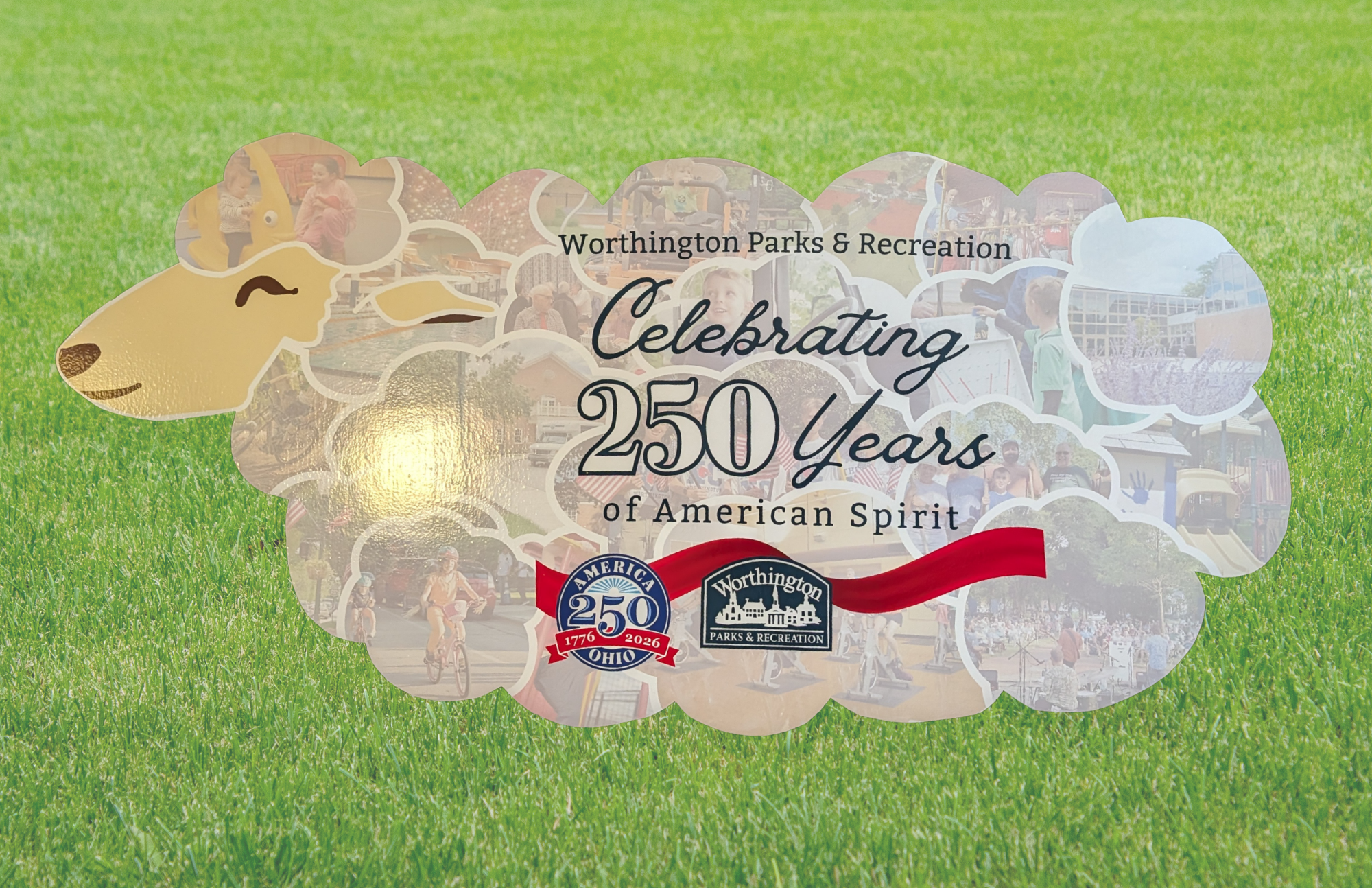
This sheep, designed by Worthington Parks & Recreation staff, celebrates 250 years of American spirit through the lens of everyday community life. A vibrant photo collage highlights the programs, parks, facilities, and events that have become beloved fixtures of Worthington life-from time on the playground to gathering at the Griswold Center.
Each section reflects the people, places, and shared experiences that strengthen community bonds and embody the spirit of connection and belonging that defines Worthington. Through these moments, Parks & Recreation continues its mission of creating community through exceptional parks, programs, facilities, and events-and celebrating the spirit that makes Worthington home.
THE ORGANIZATION: WORTHINGTON PARKS & RECREATION
Worthington's Department of Parks & Recreation was established in 1974 to oversee the development, maintenance, and operation of the city's parks, facilities, and recreational programs. Under director Bill Poling, the department guided the creation of new amenities, including the Worthington Community Center, which opened in 1977 and quickly became a hub for community activity.
Over time, the department expanded its offerings to include cultural programming, fitness services, and year round recreation. Today, Worthington Parks & Recreation manages the Worthington Community Center, the Griswold Center, and more than 200 acres of parkland, continuing its mission to create community through exceptional parks, programs, facilities, and events.
THE ARTISTS: STAFF
The Worthington Parks & Recreation Department is dedicated to creating community through exceptional parks, programs, facilities, and events. Serving residents of all ages, he department manages a wide range of offerings - from playground programs and youth sports to community events at the Griswold Center. Staff are passionate about building connections and enriching everyday life in Worthington, ensuring that every resident has access to meaningful experiences that foster belonging and well-being. As stewards of Worthington's public spaces and community programs, Parks & Recreation plays a central role in shaping the vibrant, connected community that defines life in Worthington.
-
![]()
Worthington Presbyterian Church
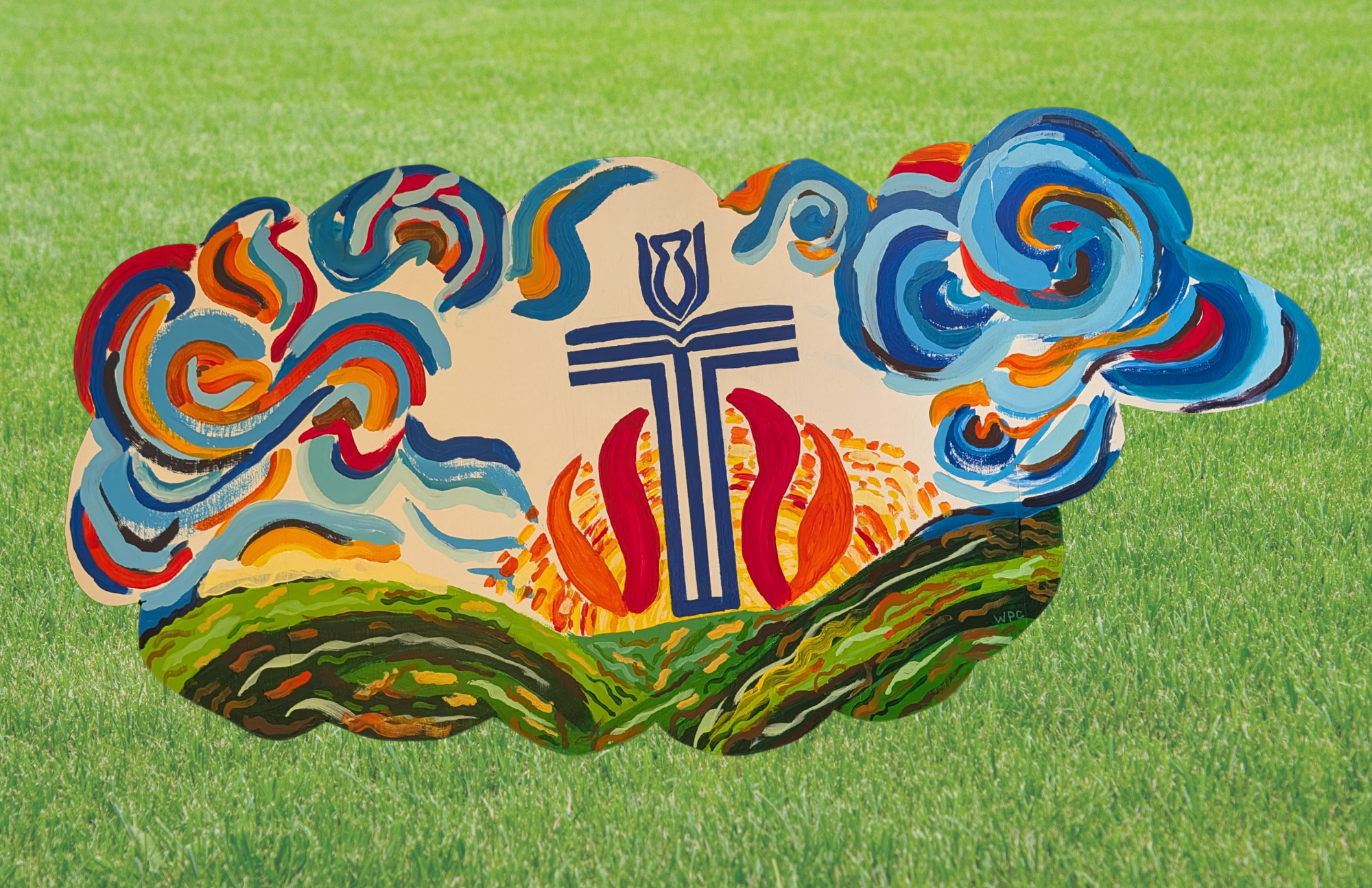
The centerpiece of this sheep is the Presbyterian Church (USA) symbol, which incorporates the cross, Bible and pulpit, burning bush, fish, and Holy Spirit-together representing the fullness of the Reformed tradition. At the base, the painting depicts Worthington's Village Green, where the congregation of Worthington Presbyterian Church has gathered from the church's earliest days to the present.
This is a community artwork in the truest sense, shaped by the hands and imaginations of congregants ranging in age from 7 to
70. It reflects the church's past, honors its present, and looks with hope toward its future-a living expression of faith, creativity, and belonging.
THE ORGANIZATION: WORTHINGTON PRESBYTERIAN CHURCH
Worthington Presbyterian Church traces its beginnings to 1805, when visiting ministers helped organize a small congregation meeting in the Peter Barker home. Early worship shifted among local buildings, including the Worthington Academy, a blacksmith shop, and the Masonic Hall, until the first church was completed in 1830 under the leadership of Rev. H. Hulburd.
As the community grew, the church expanded, adding major buildings in 1927, 1959, 1964, 1992, and 2005. Over more than two centuries, more than sixty ministers have served the congregation, guiding its worship, education, and outreach as it continues its long tradition of faith and community life.
THE ARTISTS: CONGREGATION MEMBERS
The artist behind this sheep is the entire congregation of Worthington Presbyterian Church-guided by church member Kathy Cable. The project was intentionally inclusive, gathering hands and imaginations ranging from age 7 to 70 to contribute ideas on colors, symbols, and how the artwork might reflect the church's past, present, and future. The result is a true work of community art, shaped by the collective voice of a congregation thạt has gathered on Worthington's Village Green since the church's earliest days. It is a living expression of shared faith, creative community, and the enduring bonds that connect generations within the church and the wider Worthington community.
-
![]()
Worthington Elementary Schools
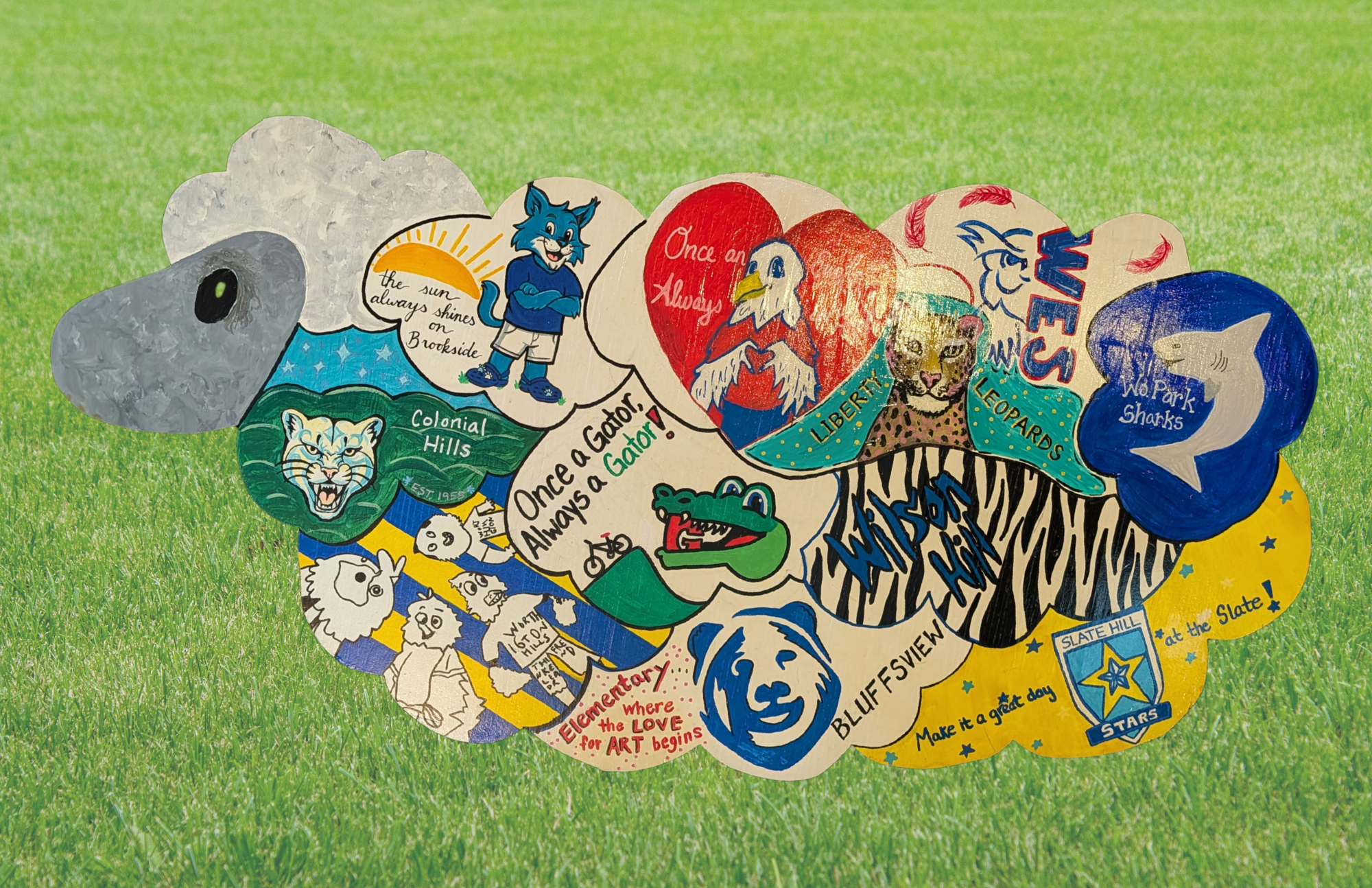
This sheep, created by our elementary art teaching team, is a vibrant tribute to the creativity and individuality that define each of our 11 elementary schools. Woven together in a dynamic montage, the design celebrates the unique identities students first embrace - Bobcats, Bears, Cougars, Eagles, Gators, Leopards, Stars, White Tigers, Owls, Hawkeyes, and Sharks. Each element reflects the imagination, pride, and spirit found in our classrooms and communities. While all students' journeys eventually unite as Cardinals, Wolves, and Newts, this piece honors where they begin - rooted in diverse experiences, connected through creativity, and growing together as part of one Worthington community.
THE ORGANIZATION: WORTHINGTON SCHOOLS
Worthington's commitment to education began in the early 1800s with a one-room log schoolhouse that anchored the young community's belief in learning. The district evolved significantly between 1916 and the 1960s, opening the original Worthington High School (now the McConnell Arts Center), Kilbourne Middle School in 1938, and a new high school in 1951.
The district expanded rapidly during this era, and additional middle and elementary schools, along with another high school, were built by the early-1990s. Formed through mergers beginning with the 1949 unification of Sharon Township and Worthington Village districts, Worthington Schools continues to grow, adapt, and modernize its buildings to support 21st-century learning for all students.
THE ARTISTS: ELEMENTARY TEACHERS
Keely Murray - Brookside
Hilary Soroosh - Wilson Hill
Alicia Longs - Granby
Stephanie Richardson - Worthington Park
Lauren Stewart - Slate Hill
Erin Brandol - Liberty
Zachary Seltzer - Worthington Estates
Laura Koontz - Worthington Hills
Kelly Liddil - Colonial Hills
Laura Wetz - Evening Street
Giannalisa Schumer - Bluffsview
-
![]()
Beth Tikvah
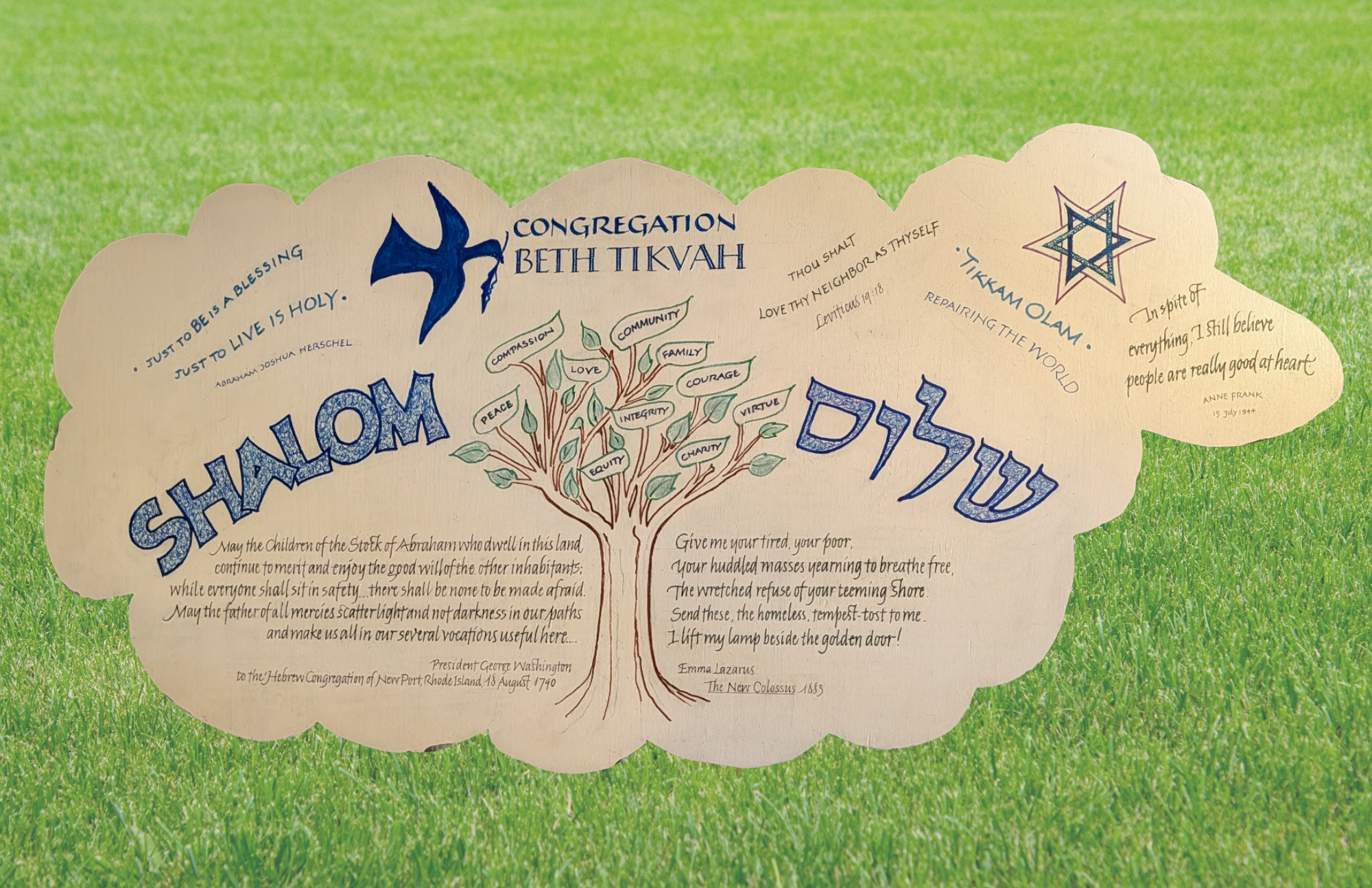
The inspiration behind our art centers on the image of a tree, symbolizing growth, connection, and community. Its branches represent the ways we reach outward to build caring, respectful relationships and work toward a world where all people feel safe, valued, and free to live and practice their faith. In Judaism, the tree is a powerful symbol of wisdom, faith, and the bond between God and humanity-often connected to the Torah as the "Tree of Life" for those who hold fast to it. The piece also incorporates meaningful elements such as the Star of David and messages from historical figures like Emma Lazarus, George Washington, and Abraham Joshua Heschel, reinforcing themes of freedom, belonging, and the enduring pursuit of justice and compassion.
THE ORGANIZATION: BETH TIKVAH
Since its founding, Congregation Beth Tikvah has been a cornerstone of Jewish life in Greater Columbus, growing from just 34 families into a vibrant and welcoming Reform Jewish community with over 500 families. Rooted in a vision first imagined in 1956 by families gathering at OSU Hillel, Beth Tikvah prioritizes blending tradition with innovation. Today, we are more than a place of worship - we are a dynamic, inclusive community where individuals and families from all backgrounds are welcomed and celebrated.
We foster meaningful connections through prayer, lifelong learning, and acts of service that repair the world. Our congregation is a place for spiritual growth, intellectual exploration, and joyful celebration, where ancient wisdom meets modern life in relevant and inspiring ways.
From milestone moments to everyday connections, Beth Tikvah continues to evolve while staying rooted in community and purpose.
THE ARTIST: SUSAN POMERANTZ & ANNE WOODS
Susan has long been drawn to creative expression, studying Fine Arts as a second major in college and working with stained glass for over 20 years. She enjoys drawing and is currently exploring watercolor painting, while also contributing her artistic eye to Beth Tikvah's WBT Gift Shop display case. Her creativity extends into knitting, crocheting, and quilting - hands-on expressions that reflect her love of both art and tradition.
Anne is a lifelong artist and educator who has been freelancing through AIMIA Art Works since 1981, specializing in custom hand lettering and book arts such as marbling and decorative papers. She has spent decades teaching both adults and children, integrating art with history, language, and culture. Her work is featured in major collections, and she has received international recognition, including being the first American calligrapher invited to the Changan Conference in Xian and a three-time Grand Prize winner of the World Handwriting Contest.
-
![]()
Worthington Kilbourne High School
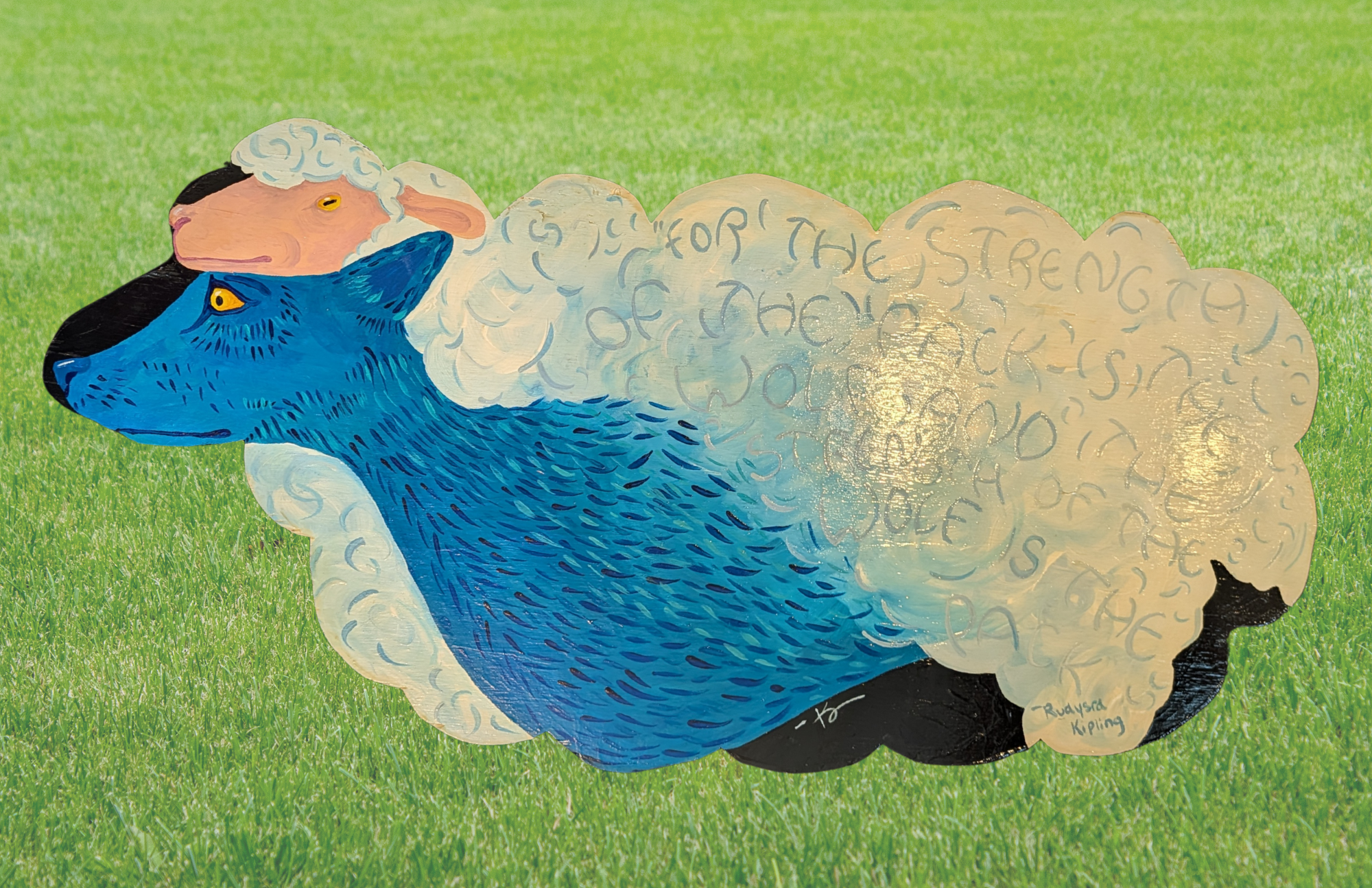
As a group we decided to do an interpretation of the phrase "A wolf in sheep's clothing," since the WKHS mascot is a wolf. Our metaphor focuses on adaptability and personal transformation. Our wolf adopts the sheep's persona of being gentle and approachable to navigate life's challenges while maintaining the strength, intelligence, and ambition of a wolf to achieve goals. The wolf is not hiding under a sheep but is integrating with the sheep, seeing value in its qualities while maintaining the qualities of a wolf.
Within the wool of the sheep you can find the WKHS motto by Rudysrd Kipling, "For the strength of the Pack is the Wolf and the strength of the Wolf is the Pack."
THE ORGANIZATION: WORTHINGTON SCHOOLS
Worthington's commitment to education began in the early 1800s with a one-room log schoolhouse that anchored the young community's belief in learning. The district evolved significantly between 1916 and the 1960s, opening the original Worthington High School (now the McConnell Arts Center), Kilbourne Middle School in 1938, and a new high school in 1951.
The district expanded rapidly during this era, and additional middle and elementary schools, along with another high school, were built by the early-1990s. Formed through mergers beginning with the 1949 unification of Sharon Township and Worthington Village districts, Worthington Schools continues to grow, adapt, and modernize its buildings to support 21st-century learning for all students.
THE ARTISTS
This sheep was created by WKHS Visual Arts teacher, Kimberly Gibson-McDonald, under the artistic guidance of three of her painting students: Ella Prediger, Emma Keltz, and Hind Al Jumaili.
-
![]()
St. John's Episcopal Church
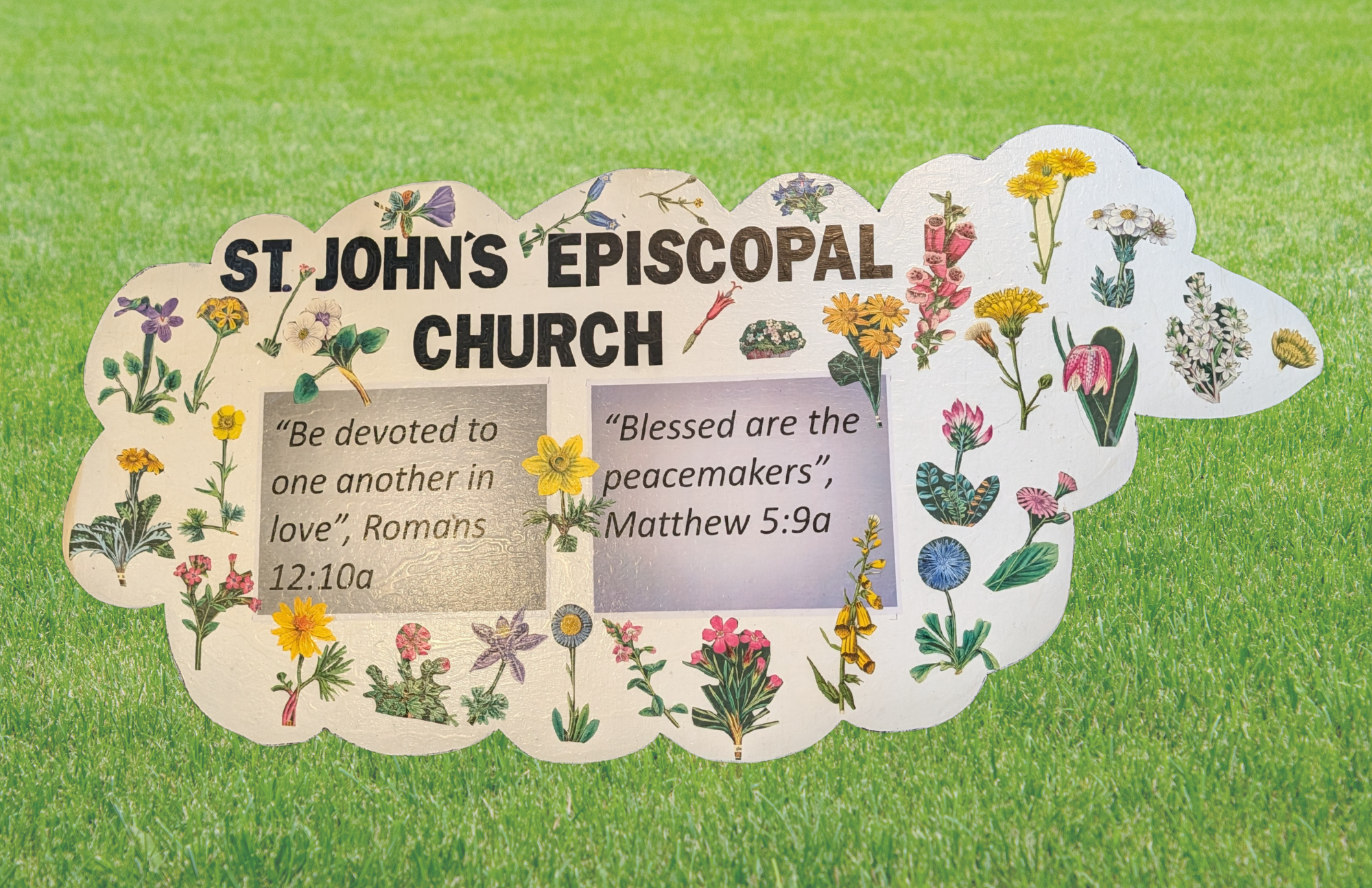
The Prairie Sheep is a decoupage piece celebrating the natural history of Worthington. The vibrant floral pattern is representative of the diverse wild flowers that may have greeted the group of early settlers from Connecticut who founded St. John's Episcopal Church in 1803. The two scriptures represent the essential message of Christianity.
THE ORGANIZATION: ST. JOHN'S EPISCOPAL CHURCH
St. John's Episcopal Church traces its origins to 1803, when twelve families from Granby, Connecticut founded Worthington with a vision rooted in faith and education. Their meeting house-built before the settlers arrived - served as the first church, school, and community gathering place, furnished with items brought by oxcart. The congregation formally organized on February 6, 1804, with founder James Kilbourne serving until the arrival of the Rev. Philander Chase, later Ohio's first Episcopal bishop. In 1831, members completed the church that remains the primary worship space. Over three centuries, St. John's has upheld its founding values of community, faith, and shared purpose.
THE ARTIST: TERI FOLEY-NELSON
The Prairie Sheep, was created by Teri Foley-Nelson and a talented group of parishioners of St. John's Episcopal Church. Teri is a self- taught artist who works in watercolor, pastel, and colored pencil.
-
![]()
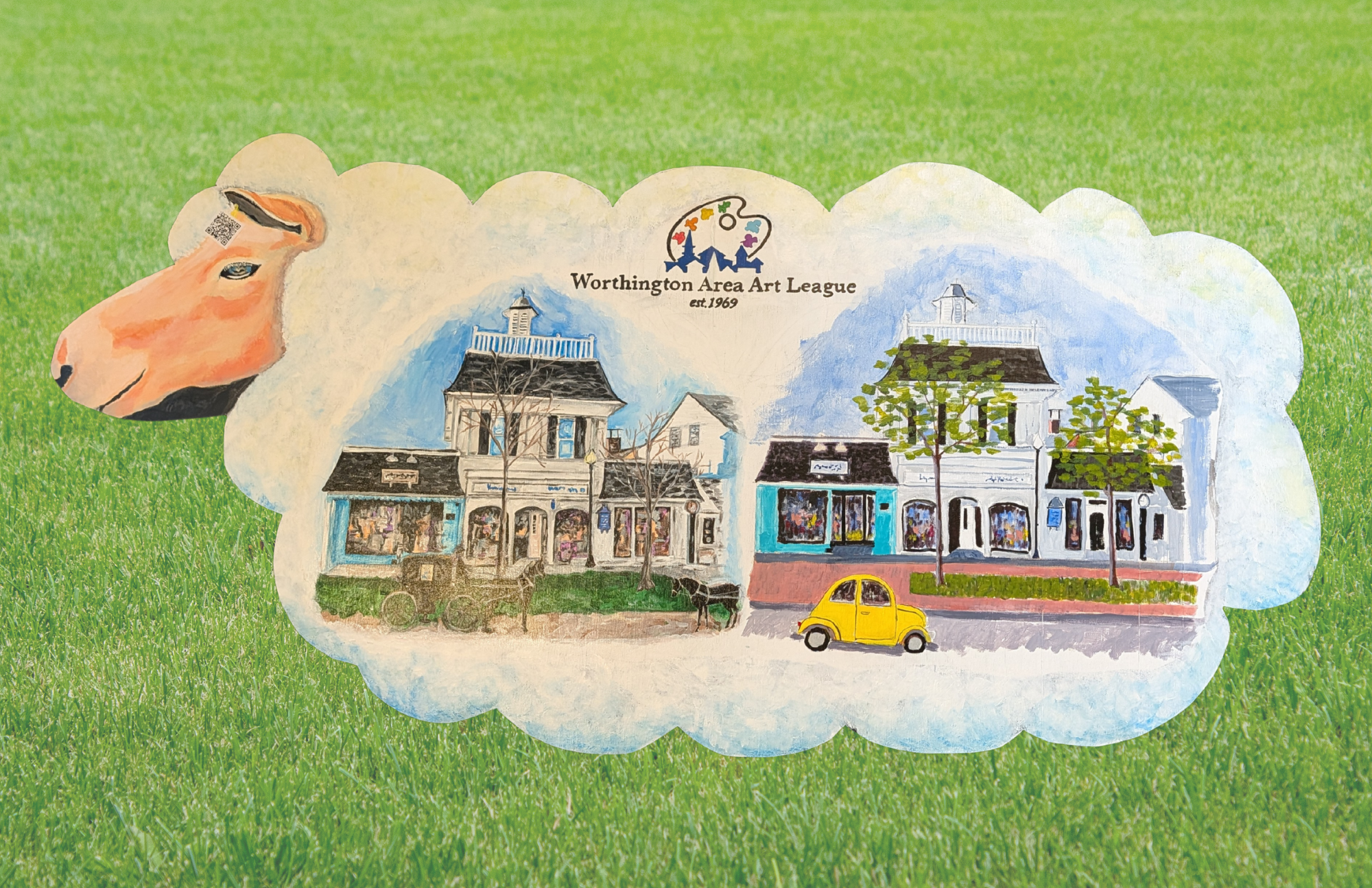
Worthington Area Art League
The team designed the sheep to illustrate the passage of time through the aging of a single building on High Street. They selected two historical photo references and painted them onto the sheep: one featuring a horse and buggy parked in front of the building, and the other showing a Volkswagen in the same location decades later. WAAL's name and logo appear on the top-middle of the sheep, framed by the sculpted wool. As a playful nod to modern progress, the sheep sports an ear tag with a QR code linking to WAAL's website.
THE ORGANIZATION: WORTHINGTON AREA ART LEAGUE
Congregation Beth Tikvah began in 1956, when Jewish families on Columbus's north side gathered at OSU Hillel with a vision for a synagogue blending tradition and innovation. The congregation held its first High Holy Day services in 1961 and soon celebrated milestones including its first Torah and the founding of its Sisterhood. Growing membership led to moves in 1968 and again in 1981, when the Resler family's generosity enabled construction of a permanent home in Worthington. Over the decades, Beth Tikvah expanded its facilities, educational programs, and leadership, welcoming new rabbis, launching community initiatives, and strengthening its role as a vibrant center of Jewish life.
THE ARTIST: BETH VELDEY
Beth Veldey, painter and treasurer of the Worthington Area Art League (WAAL), applied for the league to participate in the Worthington Historical Society's Pasture to Progress Sheep Project. WAAL members were immediately enthusiastic, holding two planning meetings at the Worthington Library to develop a collaborative design. The sheep has been passed from artist to artist, with each member contributing a portion of the work.
The project team includes painters Shannon Hobbs and Rod Hayslip; glass artist Andi Wolfe; Steve Wolfe, who contributed painting, sketching, and photography; colored pencil artist Helen Siegel; oil painter Katherine Crowley; and Johneen Griffin, who served as project manager. The final artist to work on the sheep will photograph the completed piece and share the image with all participants and WAAL.
Flocking To a Worthington City Park Near You!
As Worthington joins communities across the nation in commemorating America’s 250th anniversary, we’re celebrating our heritage in a uniquely local way. Sheep Pastures to Progress is a large-scale outdoor art and history installation that honors Worthington’s transformation—from the early days when livestock grazed on the Village Green to the thriving, creative suburb we know today.
From April through October 2026, painted sheep silhouettes will appear throughout Worthington’s public spaces. Each sheep is a collaborative creation, designed and decorated by local artists, cultural organizations, schools, and community groups. The artwork reflects the identity, mission, or spirit of each participating group, turning the city into a walkable gallery that blends creativity with place-based storytelling.
Every sculpture will feature a QR code linking to digital content curated by the Worthington Historical Society, including historic narratives, archival photos, videos, and introductions to the artists and organizations behind each sheep. This interactive layer invites residents and visitors alike to explore the people, stories, and moments that shaped Worthington’s evolution.
Built to weather the elements and travel between display locations, the sheep will rotate throughout the city from spring to fall—appearing in parks, business districts, civic spaces, and unexpected corners of Worthington.
This project is led by the America 250 – Worthington committee in partnership with the Worthington Historical Society and local community organizations. Together, we invite you to celebrate our shared past, honor our present, and imagine Worthington’s future—one sheep at a time
On View at East Granville Road Park: The land east of Morning Street—stretching toward what is now I‑71—was first laid out as farm lots by the Scioto Company in 1803. In the early years, the area just south of Granville Road was owned by Ebenezer Street and Ezra Griswold and used primarily for farming.
In 1855, Uriah Heath purchased the farmland and platted it as the Morris Addition—Worthington’s first subdivision, established in 1856. A few years later, local attorney James Wright built a large Victorian home on the site in 1869. He and his wife Elizabeth raised eight children there, including Moses Wright, the namesake of the nearby nature preserve. The mansion stood for nearly a century.
During World War I, neighbor Joe Potter remembered Wright fencing part of his land and keeping sheep there to support the war effort.
Frequently Asked Questions
-
In 1812, Worthington founder James Kilbourn imported 103 Merino sheep, a breed whose fine wool sold for five to six times the price of common wool. Livestock grazed freely on the public square until an 1836 ordinance banned sheep and swine from roaming in the village. Later restrictions were added for horses, mules, cattle, goats, and geese. By 1850, Sharon Township held more than 2,700 sheep - far outnumbering its roughly 1,000 residents.
-
From the Village Green, once a pioneer grazing ground, the public parks occupied by farms well into the mid‑20th century, Worthington has grown from a rural settlement into a thriving suburb.
The sheep silhouettes honor that agricultural past while celebrating the many people and organizations that shape the community today.